

Most American streetwear fans know the thrill of spotting a rare vintage hoodie that feels like it belongs in a pop culture time capsule. With over 60 percent of young collectors seeking pieces that mix nostalgia and authenticity, these garments represent more than old-school style. Their roots weave together cultural history, ethical values, and lasting design. Discover what makes each vintage hoodie a statement for both identity and sustainable fashion.
Table of Contents
- Defining Vintage Hoodies and Their Roots
- Key Design Elements and Fabric Choices
- Cultural Icons and Hoodie Evolution
- Nostalgia’s Role in Modern Streetwear
- Ethical Sourcing and Collectibility Factors
Key Takeaways
| Point | Details |
|---|---|
| Cultural Significance | Vintage hoodies serve as cultural artifacts reflecting rebellion, comfort, and self-expression, with deep roots in various subcultures. |
| Design Features | Key design elements like the kangaroo pocket and raglan sleeve enhance functionality and reflect historical influences in fashion. |
| Nostalgia in Fashion | The allure of vintage hoodies lies in their ability to evoke nostalgia, connecting wearers to cultural memories and personal narratives. |
| Ethical Sourcing | Vintage hoodie collectors increasingly prioritize sustainability and ethical sourcing, seeking pieces with documented histories and cultural significance. |
Defining Vintage Hoodies and Their Roots
Vintage hoodies represent more than just a piece of clothing — they are cultural artifacts that capture the spirit of rebellion, comfort, and self-expression. Emerging from diverse subcultures, these garments tell stories of social movements, artistic expression, and personal identity. Their roots stretch back to the early 20th century, when sweatshirts first transitioned from athletic wear to everyday fashion.
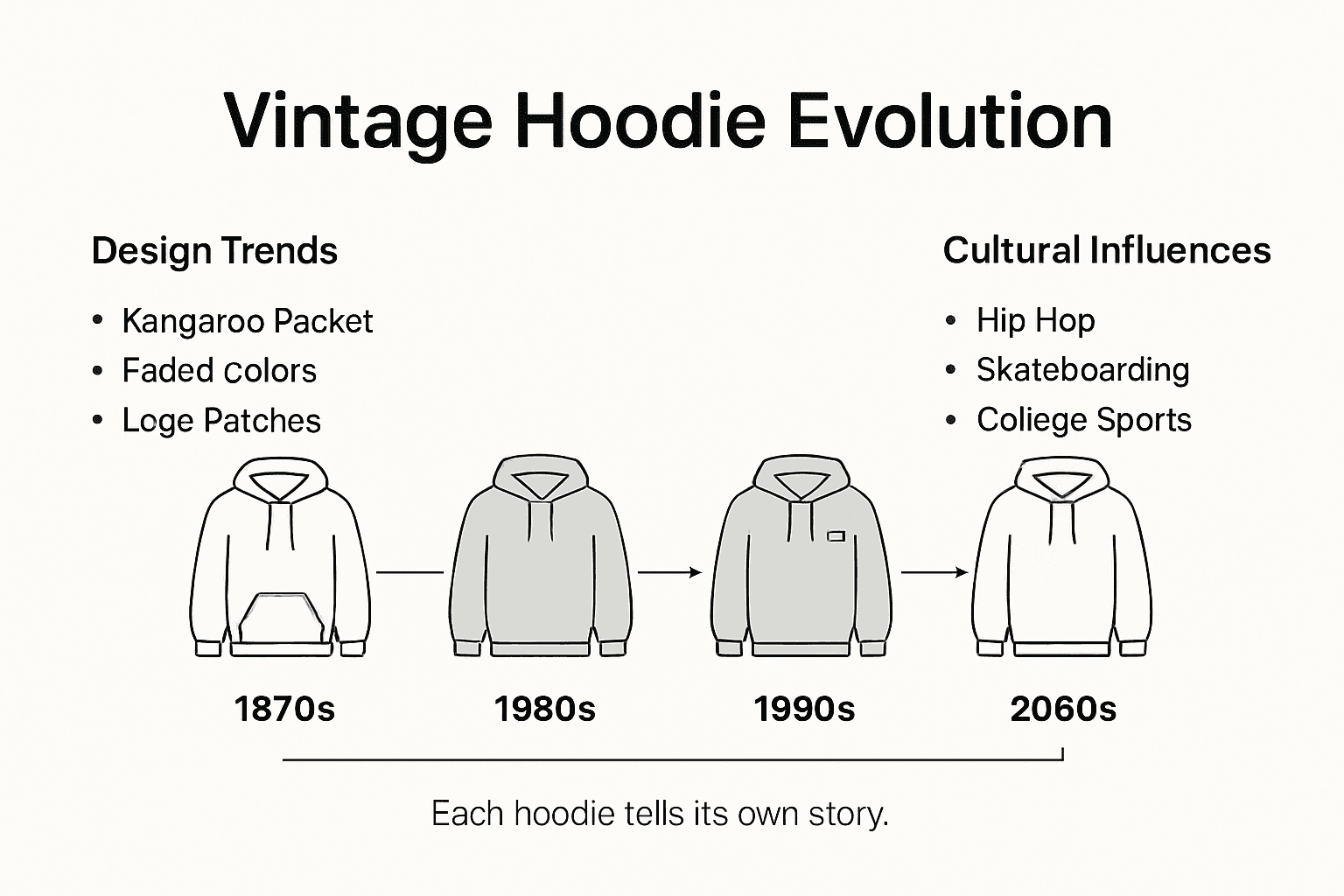
The evolution of vintage hoodies can be traced through their distinctive design elements. Consider the kangaroo pocket, a hallmark feature that originated in the 1930s as a practical hand warmer. This functional design quickly became popular among skateboarders, college students, and urban youth who appreciated its convenience for carrying personal items. The pocket transformed from a simple utility to a statement of casual cool.
Cultural influences played a significant role in shaping vintage hoodie aesthetics. Baja jackets, for instance, introduced vibrant horizontal and vertical stripes that would later inspire hoodie designs. These Mexican-inspired garments, traditionally made from coarse woolen fabric called ‘jerga’, brought rich textile traditions into streetwear. The fusion of utility, comfort, and cultural expression became the cornerstone of what we now recognize as vintage hoodie style.
Pro Tip for Vintage Hoodie Enthusiasts: Research the specific cultural and historical context of your vintage hoodie to understand its unique story and significance beyond just its aesthetic appeal.
Key Design Elements and Fabric Choices
Vintage hoodies are distinguished by their unique design elements that blend functionality with aesthetic appeal. At the core of their construction lie strategic design choices that elevate them beyond simple clothing items. The raglan sleeve stands out as a prime example of this thoughtful approach, extending diagonally from the underarm to the neckline and eliminating the traditional horizontal shoulder seam.
Fabric selection plays a crucial role in defining the character of vintage hoodies. Classic materials like heavyweight cotton, French terry, and fleece-lined fabrics dominate the landscape, offering a combination of durability and comfort. Wool blends and organic cotton have gained popularity among enthusiasts seeking both sustainability and authentic vintage feel. These materials not only provide warmth but also develop a unique patina and softness with repeated wear.
Color and texture contribute significantly to the vintage hoodie’s aesthetic. Muted earth tones, washed-out pastels, and intentionally faded prints reflect the nostalgic ethos of vintage design. Distressed fabric treatments, reverse weave techniques, and purposeful wear patterns tell a story of lived experience. Brands began experimenting with garment dyeing and enzyme washing to create that coveted worn-in look that makes each piece feel like a personal artifact.
Pro Tip for Fabric Selection: Always check the fabric weight and blend composition when selecting a vintage hoodie to ensure authenticity and long-term wearability.
Here’s a quick comparison of core vintage hoodie design features and their influence:
| Design Feature | Origin Era | Functional Purpose | Cultural Impact |
|---|---|---|---|
| Kangaroo Pocket | 1930s | Hand warming, storage | Became casual fashion staple |
| Raglan Sleeve | Early 20th c. | Improved mobility, fit | Popular in sports, streetwear |
| Baja Stripes | Mid-20th c. | Distinctive visual style | Introduced folk influences |
| Distressed Fabric | Late 20th c. | Worn, lived-in look | Evokes nostalgia, authenticity |
Cultural Icons and Hoodie Evolution
The hoodie’s journey from functional sportswear to cultural statement mirrors the complex social movements of the 20th century. Initially designed for athletes and laborers seeking warmth, the garment gradually transformed into a powerful symbol of rebellion, identity, and self-expression. Musicians, athletes, and counterculture movements systematically appropriated the hoodie, elevating it from simple clothing to a canvas of personal and collective narrative.

Brands like Aviator Nation exemplify the vintage hoodie’s evolution, capturing the essence of nostalgic design with their intentionally worn-in aesthetic. Founded in 2006, this brand represents a modern approach to vintage styling, featuring single-needle stitching and hand-drawn graphics that celebrate the imperfect, lived-in quality of classic streetwear. Their unisex designs reflect a broader cultural shift towards clothing that transcends traditional gender boundaries.
Subcultures have been instrumental in defining the hoodie’s cultural significance. Hip hop artists in the 1970s and 1980s transformed the hoodie into a symbol of urban resilience, while skateboarders and punk rockers adopted it as a uniform of non-conformity. Each community reimagined the hoodie, imbuing it with layers of meaning that extended far beyond its original utilitarian purpose. The garment became a silent communicator of attitude, resistance, and personal philosophy.
Pro Tip for Cultural Hoodie Enthusiasts: Research the specific subculture and historical context behind vintage hoodies to truly appreciate the deeper narrative woven into each garment’s fabric.
To highlight hoodie evolution, here’s a summary of key subcultures and their unique contributions:
| Subculture | Decade | Hoodie Meaning | Lasting Influence |
|---|---|---|---|
| Hip Hop | 1970s-80s | Symbol of resilience | Urban fashion mainstream |
| Skateboarding | 1980s-90s | Emblem of non-conformity | Streetwear silhouettes |
| Punk Rock | 1970s-80s | Statement of rebellion | Custom graphics, slogans |
| College Culture | 1950s-60s | Comfort and identity | Mascot prints, school pride |
Nostalgia’s Role in Modern Streetwear
Nostalgia has transformed from a mere emotional response to a powerful design philosophy in contemporary streetwear. Modern fashion enthusiasts seek more than just clothing — they crave narrative, connection, and a tangible link to cultural memories. Victory hoodies exemplify this phenomenon, representing curated symbols of cultural moments that transcend simple fabric and stitching.
The allure of vintage streetwear lies in its ability to communicate stories through visual and tactile elements. Logos from defunct sports teams and retro branding serve as visual artifacts, telling narratives about specific cultural eras. These garments represent an authenticity that mass-produced contemporary clothing often lacks, offering wearers a sense of uniqueness and historical connection.
Psychologically, nostalgic fashion serves as a form of emotional armor. By wearing vintage pieces, individuals reconnect with personal and collective memories, reimagining past cultural moments through contemporary style. The hoodie has become more than a garment — it’s a personal museum, a wearable archive of individual and shared experiences that bridges generational gaps and celebrates cultural evolution.
Pro Tip for Nostalgic Streetwear Collectors: Research the specific cultural context of your vintage pieces to understand the deeper narrative behind each garment’s design and origin.
Ethical Sourcing and Collectibility Factors
Vintage hoodie collecting has evolved into a sophisticated practice that extends far beyond mere fashion acquisition. Modern collectors prioritize not just aesthetic appeal, but the ethical and sustainable origins of their garments. Brands like Maharishi exemplify this approach, demonstrating how fashion can repurpose existing materials like military surplus and vintage textiles to create meaningful, environmentally conscious clothing.
Authentication and provenance have become critical factors in vintage hoodie collectibility. Platforms like Her-Age have revolutionized the vintage marketplace by offering rigorous verification processes that guarantee the legitimacy and historical accuracy of each piece. Collectors now seek hoodies with documented histories, unique manufacturing details, and traceable origins that tell compelling stories about their cultural and material heritage.
The intersection of sustainability, ethical sourcing, and fashion has transformed vintage hoodie collecting into a form of cultural preservation. Collectors are no longer just acquiring clothing, but becoming custodians of textile history. Each carefully sourced piece represents a commitment to reducing fashion waste, celebrating craftsmanship, and preserving the narratives embedded in vintage garments. This approach reflects a broader shift towards conscious consumption and respect for the environmental and social contexts of clothing production.
Pro Tip for Ethical Vintage Collectors: Always research the full supply chain and production history of vintage pieces to ensure you’re supporting sustainable and responsible fashion practices.
Make Your Vintage Hoodie More Than Just a Look
The “Origin of Vintage Hoodies: From Subculture to Statement” article highlights how these iconic garments carry stories of rebellion, identity, and cultural connection. If you crave more than just fashion and want your hoodie to be a real expression of who you are then you understand the challenge of finding pieces that talk back. You want authenticity that reflects your values and sparks conversations rooted in nostalgia, humor, and heart.
At ChillStitch.com we create hoodies designed to do exactly that — combining vintage-inspired graphics with ethical fabrics so your clothes become a canvas of personal statements. Whether you admire the cultural history of raglan sleeves or seek comfy cotton blends that age with you, our collection offers “Your Hoodie. Your Statement.” Each design is crafted to connect pop culture playfulness with the deeper meaning the article explores.
Ready to wear clothes that spark talks and carry stories? Visit ChillStitch.com now to discover hoodies and sweatshirts that celebrate nostalgia and humor with integrity. Say it loud wear it proud and let your vintage hoodie be more than just a look — make it your statement today.
Frequently Asked Questions
What defines a vintage hoodie?
Vintage hoodies are characterized by their cultural significance and design elements that blend functionality with comfort. They often feature distinctive attributes such as kangaroo pockets, raglan sleeves, and unique fabric compositions that reflect their historical context.
How have vintage hoodies evolved over time?
Vintage hoodies have transitioned from athletic wear in the early 20th century to symbols of rebellion and self-expression, heavily influenced by various subcultures such as hip-hop, punk rock, and skateboarding.
What materials are commonly used in vintage hoodies?
Common materials for vintage hoodies include heavyweight cotton, French terry, and fleece-lined fabrics, with blends of wool and organic cotton also gaining popularity for their durability and comfort.
Why is nostalgia important in modern streetwear?
Nostalgia plays a crucial role in modern streetwear by connecting individuals to cultural memories and personal histories. Vintage hoodies serve as wearable artifacts that bridge generational gaps and celebrate the evolution of style.