

Most hoodie lovers agree that true comfort means way more than just a soft fabric against your skin. In American and global pop culture, hoodies have become powerful symbols—part cozy blanket, part personal billboard—offering emotional security and making every graphic and slogan count. With over 80 percent of Generation Z naming comfort as their top priority in everyday wear, it is clear why ethical production and self-expression matter when picking that next funny or retro hoodie.
Table of Contents
- Defining Comfort In Today’s Hoodie Culture
- How Fabrics And Fit Shape Comfort
- Pop Culture’s Role In Hoodie Preferences
- Comfort’s Impact On Self-Expression And Connection
- Prioritizing Ethical Production And Wellness
Key Takeaways
| Point | Details |
|---|---|
| Emotional Comfort | Hoodies provide psychological refuge and help navigate social spaces while maintaining personal boundaries. |
| Fabric and Fit | The choice of fabrics and hoodie fit greatly influences comfort, balancing physical sensations with psychological security. |
| Cultural Significance | Hoodies have evolved into powerful symbols of personal identity and self-expression, influenced by music and pop culture. |
| Ethical Production | Supporting ethical fashion entails researching brands’ practices, promoting sustainability and worker welfare in clothing production. |
Defining Comfort in Today’s Hoodie Culture
Comfort in hoodies is no longer just about physical softness—it’s a complex psychological experience that reflects personal identity and emotional resilience. Modern hoodies serve as more than mere clothing items; they are personal sanctuaries that provide psychological refuge in an increasingly uncertain world. Psychological research reveals that hoodies act as emotional armor, offering wearers a sense of security and confidence.
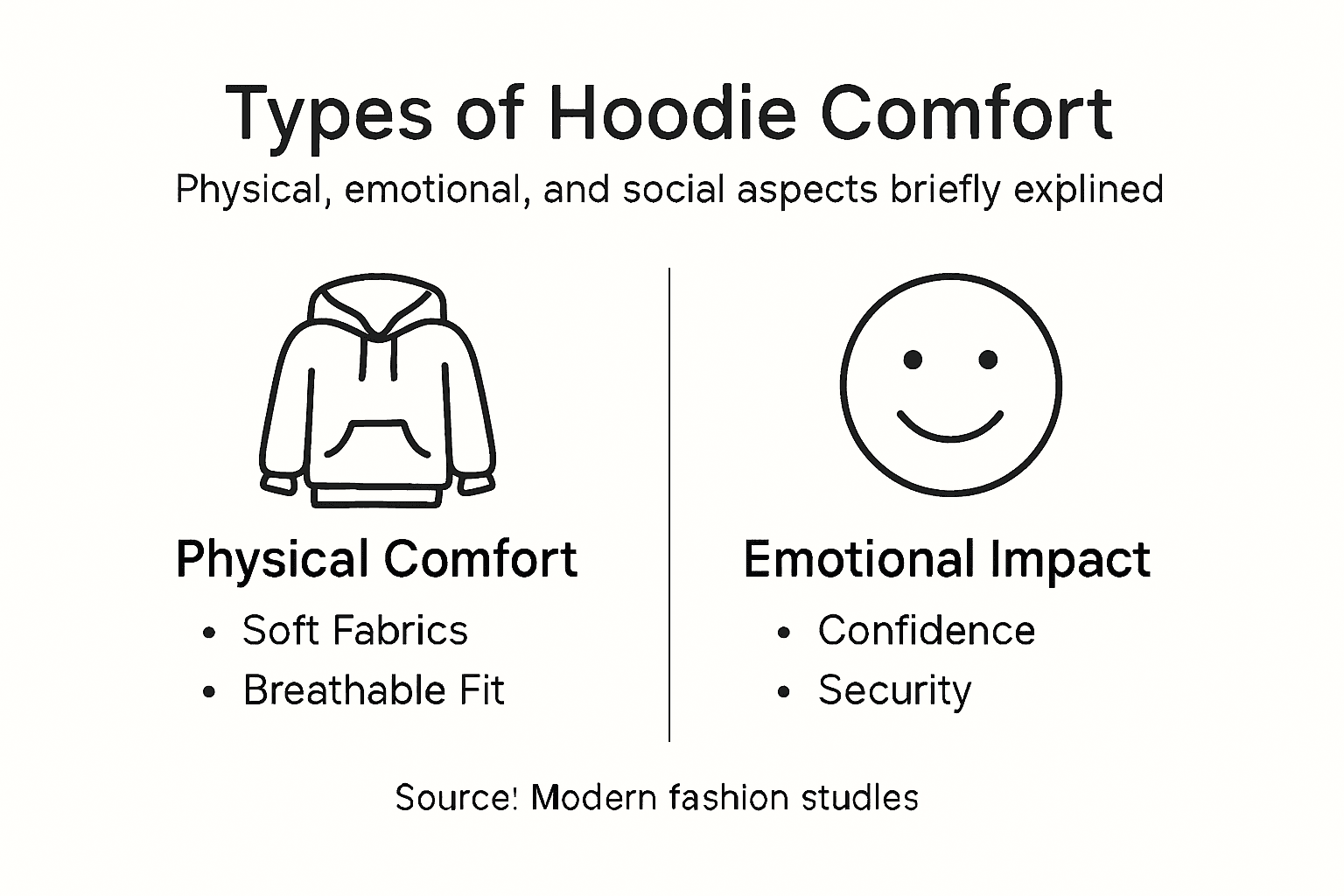
The contemporary hoodie culture understands comfort through multiple dimensions. Physical comfort matters—soft fabrics, relaxed fits, temperature regulation—but emotional comfort is equally crucial. For Generation Z, hoodies represent a protective layer that allows individuals to navigate social spaces while maintaining personal boundaries. The oversized design isn’t just a fashion statement; it’s a strategic choice that provides psychological protection, allowing wearers to feel simultaneously visible and shielded.
Moreover, hoodies have transformed into symbols of emotional resilience. Digital age research demonstrates that they serve as portable comfort zones, helping people manage stress and maintain focus in unpredictable environments. Whether working remotely, studying in crowded spaces, or navigating social interactions, hoodies offer a consistent sense of personal comfort and psychological stability.
Pro tip: When selecting a hoodie, prioritize emotional fit alongside physical comfort—choose designs that make you feel confident and protected.
How Fabrics and Fit Shape Comfort
Comfort in hoodies transcends simple physical sensations, emerging from a sophisticated interplay between fabric technology and ergonomic design. Fabric properties fundamentally determine the thermal and physiological experience of wearing a hoodie, creating a microclimate that directly impacts personal comfort. The intricate relationship between skin, fabric, and environmental conditions transforms a simple garment into a personalized comfort system.
Cotton and cotton blends remain popular choices, offering breathability and softness that create an immediate sense of comfort. However, modern hoodie design goes beyond traditional materials. Stretch fibers integrated into fabric compositions provide enhanced flexibility, allowing the garment to move seamlessly with the wearer’s body. Fabric selection critically impacts not just immediate comfort, but long-term wearability and performance across different environments and activities.
The fit of a hoodie plays an equally important role in comfort perception. Oversized designs offer psychological protection and thermal regulation, while more tailored cuts provide a streamlined silhouette. Advanced fabric technologies now incorporate moisture-wicking properties, thermal resistance, and breathability, enabling hoodies to adapt to changing body temperatures and activity levels. These innovations transform hoodies from passive clothing items into dynamic comfort technologies that respond to individual needs.

Here’s how different hoodie fabrics influence comfort and performance:
| Fabric Type | Key Comfort Benefit | Typical Use Case |
|---|---|---|
| 100% Cotton | Soft, breathable | Everyday wear, mild weather |
| Cotton Blend | Enhanced durability | Frequent use, light activity |
| Stretch Fabrics | Flexible movement | Active lifestyles, travel |
| Technical Fibers | Moisture control | Exercise, variable climates |
Pro tip: When shopping for a hoodie, perform a movement test by stretching and bending to ensure the fabric moves with you and maintains its shape.
Pop Culture’s Role in Hoodie Preferences
Music and celebrity culture have transformed hoodies from simple clothing items into powerful statements of personal identity. Music stars fundamentally reshape hoodie culture, elevating these garments from basic athletic wear to global fashion statements that represent rebellion, style, and individual expression. Through strategic stage performances and everyday appearances, musicians have effectively reimagined hoodies as versatile cultural symbols.
Customization has become a critical aspect of hoodie culture, driven by the desire to create unique personal narratives. Influencers and celebrities have popularized the trend of personalized hoodies that reflect individual personalities, social affiliations, and cultural perspectives. Custom hoodie designs represent more than just fashion choices—they are statements of authenticity, allowing wearers to communicate their identities through carefully selected graphics, colors, and styles.
The evolution of hoodie preferences demonstrates how pop culture continuously reshapes fashion trends. From hip-hop artists wearing oversized hoodies to indie musicians sporting vintage-inspired designs, each subculture contributes to a rich, dynamic narrative of self-expression. These cultural movements have transformed hoodies from simple garments into complex mediums of communication, reflecting personal stories, musical influences, and generational attitudes.
Pro tip: Choose a hoodie that resonates with your personal narrative and makes you feel authentically represented.
Comfort’s Impact on Self-Expression and Connection
Comfort transcends physical sensation, emerging as a powerful mechanism for psychological empowerment and social connection. Clothing comfort supports self-expression by providing individuals with a profound sense of emotional security and confidence. When people feel physically at ease, they become more authentic, articulate, and willing to engage with their surrounding environment, transforming comfort from a mere physical state into a dynamic social tool.
University students and young professionals particularly demonstrate how comfortable clothing like hoodies can serve as emotional armor. Social support through clothing enables individuals to manage stress, signal belonging, and create meaningful interpersonal connections. A well-chosen hoodie becomes more than an outfit—it’s a communication device that broadcasts personal identity, cultural affiliation, and emotional resilience.
The psychological mechanics of comfort reveal a nuanced relationship between physical ease and emotional expression. Comfortable clothing allows individuals to feel grounded and present, reducing social anxiety and enhancing interpersonal interactions. By providing a sense of safety and familiarity, hoodies enable wearers to navigate complex social landscapes with increased confidence, transforming personal style into a form of non-verbal communication that speaks volumes about individual experience and social belonging.
Compare the main psychological and social functions of hoodies today:
| Function | Description | Real-life Impact |
|---|---|---|
| Emotional Security | Provides psychological comfort | Reduces stress in public spaces |
| Identity Expression | Reflects personal/cultural identity | Boosts self-confidence |
| Social Belonging | Signals group or subculture affinity | Fosters connection, acceptance |
| Emotional Resilience | Acts as emotional armor | Helps navigate daily challenges |
Pro tip: Select clothing that makes you feel genuinely comfortable and confident, allowing your authentic self to shine through.
Prioritizing Ethical Production and Wellness
Ethical production represents a transformative approach to fashion that goes far beyond simple manufacturing processes. Ethical fashion centers on holistic well-being by recognizing the interconnected impacts of clothing production on workers, consumers, and global ecosystems. This comprehensive perspective challenges traditional fast fashion models, demanding transparency, fair labor practices, and environmental responsibility throughout the entire supply chain.
Sustainability research highlights complex ethical challenges in modern clothing production, revealing the intricate balance between consumer expectations and global manufacturing realities. The most progressive brands are developing innovative strategies that prioritize worker welfare, minimize environmental damage, and create meaningful economic opportunities in manufacturing communities. These approaches reject exploitative practices by embracing fair wages, safe working conditions, and environmentally sound production methods.
For consumers, supporting ethical fashion means understanding that every clothing purchase represents a vote for the kind of global economy we want to create. This involves looking beyond surface-level marketing and investigating brands’ actual practices, supply chain transparency, and commitment to social and environmental justice. Ethical hoodie production considers not just the final product, but the entire lifecycle of the garment—from raw material sourcing to worker conditions, environmental impact, and eventual disposal or recycling.
Pro tip: Research brands’ ethical production practices before purchasing, and prioritize companies that demonstrate genuine commitment to worker welfare and environmental sustainability.
Discover Hoodies That Combine Comfort With Your Personal Story
The article highlights how modern hoodies go beyond softness to become emotional armor that offers security and self-expression in everyday life. If you are seeking hoodies that provide both physical ease and a confident personal statement, ChillStitch.com is your destination. Our collection brings together vintage-inspired graphics, nostalgic pop culture nods, and ethically sourced fabrics designed to make you feel protected and authentically you.
Explore our range and embrace the idea of “Your Hoodie. Your Statement.” Each piece is crafted to foster comfort, connection, and self-expression just as the article describes. Don’t wait to upgrade your wardrobe with cozy, meaningful hoodies that speak for you. Visit ChillStitch now to find your perfect match and experience clothing that truly talks back.
Frequently Asked Questions
What are the primary types of comfort associated with hoodies?
Comfort in hoodies encompasses physical comfort, such as soft fabrics and relaxed fits, as well as emotional comfort that provides a sense of security and psychological resilience.
How do fabrics affect the comfort of a hoodie?
Different fabrics significantly influence the comfort level of hoodies. For example, cotton offers breathability, while stretch fibers provide flexibility, and technical fabrics can manage moisture, making them suitable for various activities.
Why are oversized hoodies considered psychologically beneficial?
Oversized hoodies are seen as providing psychological protection; they allow wearers to navigate social situations while feeling shielded and secure, effectively balancing visibility and personal boundaries.
How does wearing a hoodie contribute to self-expression?
Hoodies serve as a canvas for personal identity, allowing wearers to communicate their cultural affiliations, emotional states, and personal narratives through unique designs and styles.