

Sifting through racks at your favorite thrift store or scrolling late-night vintage drops, you know the thrill of spotting a tee that just feels authentic. For many millennials and Gen Z creatives, vintage tees are not about chasing trends—they are about claiming a piece of true history and making a personal statement. These shirts offer more than style, blending unique history and craftsmanship with nostalgia and eco-conscious values that set you apart in a world full of fast fashion.
Table of Contents
- Defining Vintage Tees And Their Essence
- Types Of Vintage Tees And Key Differences
- Personal Storytelling Through Retro Graphics
- Vintage Tees As Ethical, Sustainable Fashion
- Risks In Authenticity And What To Avoid
Key Takeaways
| Point | Details |
|---|---|
| Understanding Vintage Tees | Vintage tees are over 20 years old and carry genuine historical and cultural significance, unlike modern reproductions. |
| Types of Vintage Tees | Differentiate between authentic vintage, vintage bootlegs, modern bootlegs, counterfeit tees, and licensed reproductions to ensure informed purchases. |
| Sustainable Fashion | Buying vintage tees contributes to sustainability by extending the lifecycle of garments and reducing waste compared to new fast fashion items. |
| Authenticity Risks | Be vigilant against counterfeit and misrepresented vintage items by checking tag construction, fabric weight, and print texture before purchasing. |
Defining Vintage Tees and Their Essence
When you slip on a vintage tee, you’re not just wearing fabric and ink. You’re stepping into a time capsule that tells stories from decades past. But what exactly makes a tee “vintage” rather than just old? The distinction matters because it shapes how you understand what you’re wearing and why it carries so much cultural weight.
Vintage tees are typically garments produced at least 20 years prior to current trends, spanning eras from the 1920s through the 1980s. This timeframe matters because it separates genuine vintage pieces from newer retro-style reproductions. A 1970s band tee you find in a thrift shop qualifies as vintage. A brand-new shirt designed to look vintage does not. The core difference lies in authenticity and provenance. Vintage tees carry actual history within their fibers. They were originally produced for their own era’s audience, not manufactured as nostalgia products for modern consumers. That distinction creates an entirely different relationship between you and what you wear.
The essence of vintage tees goes deeper than their age. These pieces embody unique history and craftsmanship that transcends simple fashion trends. A vintage concert tee from a 1984 tour wasn’t designed with you in mind, yet it speaks directly to who you are today. It represents cultural moments, artistic movements, brand heritage, and the manufacturing techniques of its time. You might find thicker, higher quality cotton in vintage pieces compared to modern fast fashion alternatives. The printing methods created different textures and durability characteristics. These aren’t accidents of history—they’re the fingerprints of when and where the shirt was made. When you wear vintage, you’re connecting with real people from real eras who wore these same shirts first.
What separates vintage tees from contemporary retro designs is this element of genuine cultural narrative. Modern brands can certainly create tees inspired by vintage aesthetics, incorporating retro graphics and throwback themes. But a true vintage piece carries something irreplaceable: the weight of actually having existed in its original time. It survived decades because someone thought it was worth keeping. It carries wear patterns that tell stories about how it was loved. It represents an era you might have never experienced firsthand, yet suddenly you can hold it in your hands and understand something about that moment in history. For your generation specifically, this connection bridges the gap between nostalgia for eras you didn’t live through and contemporary identity expression. You’re not just buying a cute retro graphic. You’re participating in a chain of cultural continuity that stretches backward and forward in time.
Pro tip: When evaluating whether a tee is genuinely vintage, check the tag construction, fabric weight, and printing methods—original tags from the 1970s and 1980s look distinctly different from modern reproductions, and authentic vintage tees often feel noticeably heavier than contemporary clothing because manufacturing standards were different.
Types of Vintage Tees and Key Differences
Not all vintage tees are created equal. Walk into a thrift store or browse an online marketplace, and you’ll encounter pieces labeled “vintage” that vary wildly in origin, authenticity, and value. Understanding the different categories helps you make informed choices about what you’re actually buying and wearing. The difference between an authentic vintage band tee from 1989 and a modern bootleg designed to look vintage matters both for your identity expression and your wallet.
The vintage tee landscape breaks down into several distinct types, each with its own characteristics and implications. Authentic vintage tees are original pieces over 20 years old, produced during their respective era with no intention of being sold as vintage decades later. These are the real deal—a concert shirt from a 1982 tour, a promotional tee from a defunct brand, or a graphic shirt from the 1970s that someone actually wore and kept. Then you have vintage bootlegs, which are unauthorized products made during the vintage era itself. A bootleg printed in 1985 copying a famous band’s logo without permission is still vintage because of when it was made, even though it was technically illegal merchandise at the time. These have their own appeal for collectors because they represent a specific moment when unofficial merch culture thrived. Modern creators and brands also produce contemporary pieces inspired by vintage aesthetics. Modern bootlegs are recent creations designed to look and feel vintage but lack the actual age and historical provenance. You’ll find these labeled as “vintage-inspired” or “retro-style” in online shops. They capture the aesthetic you’re drawn to without the authenticity factor. Meanwhile, counterfeit tees attempt to deceive by falsely replicating original vintage designs, often presenting themselves dishonestly as authentic pieces. These undermine the integrity of the vintage market. On the opposite end of the spectrum, reproduction tees are officially licensed recreations of iconic vintage designs, created with permission and transparency. Brands sometimes re-release classic designs or partner with estates to produce legitimate reproductions that honor the original while being honest about their contemporary manufacturing.
Why does this distinction matter to your identity and style choices? Wearing an authentic vintage piece carries different cultural weight than wearing a modern bootleg, even if they look similar. When you pull on a genuine vintage tee, you’re wearing something with actual historical presence. That 1994 band shirt you found in a flea market? Someone else wore it to a show, through decades of life changes, and it survived to reach you. The wear patterns, fading, and imperfections tell a story. A modern bootleg recreates the aesthetic without that narrative. Both have merit depending on what you’re seeking—authentic vintage pieces signal deep cultural knowledge and commitment to sustainability through secondhand fashion, while modern vintage-inspired tees offer accessibility and reliability. The key is knowing which you’re buying. When you’re shopping, understanding these tee categories helps you evaluate what’s actually vintage versus what’s styled to look that way. Some collectors prize the hunt for authentic pieces as part of the experience. Others appreciate the consistency and availability of modern reproductions. Your choice reflects what authenticity means to you as part of your personal style and values.
The market has also become more complex because quality modern bootlegs can rival authentic vintage pieces in visual appeal. A well-designed contemporary vintage-inspired tee might have better printing techniques or fabric quality than an actual vintage piece from the 1970s. But they serve different purposes in your wardrobe. Authentic vintage represents connection to genuine cultural history and sustainability. Modern bootlegs offer reliable access to aesthetic preferences without the hunt or uncertainty of condition. Reproductions provide official appreciation for iconic designs with transparency about their origin. When brands like ChillStitch create vintage-inspired designs, they’re operating in that modern bootleg space with intention and honesty about what they’re offering—clothing that captures the spirit and aesthetic of vintage while being transparent about contemporary creation.
Here’s a quick comparison of the main types of vintage tees and how they differ:
| Tee Type | Original Production Era | Authenticity Level | Typical Value for Collectors |
|---|---|---|---|
| Authentic Vintage | Over 20 years ago | Highest, truly original | Premium, sought after |
| Vintage Bootleg | Vintage era (unauthorized) | High but unofficial | Niche interest, unique appeal |
| Modern Bootleg | Recent, looks vintage | Lacks provenance | Moderate, depends on design |
| Counterfeit | Recent, imitates vintage | Deceptive, not authentic | Low, often avoided |
| Licensed Reproduction | Recent, officially approved | Transparent, not vintage | Varies, depends on demand |
Pro tip: When shopping, check the tag date, fabric content, and printing method to verify authenticity—authentic vintage tags from the 1970s and 1980s use different fonts and sizing than modern reproduction tags, and genuine vintage pieces often show uneven fading and printing wear that reflects decades of actual wear rather than artificial distressing.
Personal Storytelling Through Retro Graphics
Your vintage tee is not a silent piece of fabric. Every graphic, every faded band logo, every worn-out slogan on your chest tells a story about who you are and what matters to you. Retro graphics function as a visual language that communicates your identity without needing words. When someone sees you wearing a 1980s concert tee or a vintage brand shirt, they’re reading a narrative you’ve written through fabric and ink. This is personal storytelling at its most accessible and wearable.
Graphic narratives and retro-style visuals function as potent tools for expressing complex identities and cultural histories in ways that transcend traditional conversation. A vintage band tee isn’t just merchandise from a concert that happened decades before you were born. It’s your statement that you connect with that era’s music, aesthetic, and cultural moment. It signals something about your taste, your values, and what resonates with you emotionally. When you wear a retro graphic from a defunct brand or a faded movie reference, you’re saying “this moment in pop culture matters to me” without explanation required. The graphic does the storytelling work. Your friends recognize the shirt. Strangers might nod in acknowledgment. Someone stops you at a coffee shop because they wore that same tee in 1989 and suddenly you have a connection bridging decades and life experiences. That’s the power of retro graphics as communication tools.
Vintage tees with retro graphics serve as mediums for both personal and cultural storytelling by embedding social and historical references into something you wear daily. Consider a vintage Nirvana tee. That graphic isn’t just a pretty design. It represents grunge culture, 1990s alternative music, a specific moment when that aesthetic dominated youth culture, and whatever personal meaning you’ve attached to it. Maybe you discovered the band through your parent’s vinyl collection and it became your gateway to understanding their generation. Maybe you’re drawn to the era’s visual language and want to express that aesthetically. Maybe the band’s music genuinely shaped how you see the world. All of these narratives layer onto that single graphic when you wear it. Retro graphics on vintage tees act as visual storytelling devices, embodying moments in time, personal experiences, and collective memories simultaneously. You’re wearing history, cultural context, and your own interpretation all at once.

What makes this form of storytelling particularly powerful for your generation is that it bridges the personal and cultural seamlessly. You didn’t live through the 1970s, but you can wear a shirt that did and claim connection to that era’s visual language and cultural values. You didn’t attend that Radiohead concert in 1998, but the shirt places you in dialogue with everyone who did. Retro graphics enable what researchers call “multidimensional self-expression,” where a single garment communicates multiple layers of meaning simultaneously. When you choose a vintage tee with intentionality, you’re curating a personal narrative about your identity. Are you drawn to graphic design from a particular decade? Do specific cultural references resonate with your worldview? Do you want people to recognize shared taste through the imagery you wear? These choices matter because they’re conscious acts of self-representation. Unlike scrolling through social media where identity can feel curated and filtered, wearing a vintage tee with a retro graphic is a tactile, embodied form of storytelling. It’s there on your body. It’s real. It weathers and changes as you wear it. The fading of the graphic mirrors your own journey wearing that shirt. ChillStitch understands this dynamic because the brand operates from the philosophy that “clothes that talk back.” Retro graphics don’t require lengthy explanation. They speak directly to anyone who recognizes the reference or appreciates the aesthetic. Your vintage tee becomes a conversation starter, a signal of cultural literacy, and a personal statement all wrapped into one wearable narrative.
Pro tip: When selecting a vintage tee for its storytelling potential, choose graphics that genuinely resonate with you rather than picking pieces solely because they’re trendy, as authentic personal narrative comes through when you can actually articulate what the graphic means to your identity and cultural perspective.
Vintage Tees as Ethical, Sustainable Fashion
When you buy a vintage tee, you’re making a statement about more than just style. You’re participating in a quiet revolution against fast fashion’s throwaway culture. Every vintage piece you wear is a small act of environmental resistance. This shirt already exists. It was manufactured years ago, worn by someone else, and somehow made its way to you. By wearing it, you’re extending its lifecycle instead of contributing to the mountains of textile waste that pile up in landfills every year. That’s not a side benefit of vintage fashion—it’s a core part of why it matters.
The environmental case for vintage tees is straightforward and compelling. Producing new clothing requires enormous amounts of water, energy, and chemical processing. A single cotton tee demands roughly 2,700 liters of water to produce from raw fiber to finished garment. It generates carbon emissions through manufacturing, transportation, and retail distribution. When that new shirt inevitably gets discarded after a few seasons, it joins the estimated 85 percent of textiles that end up in landfills annually. A vintage tee bypasses all of this. It’s already been manufactured. The environmental cost was paid decades ago. When you wear it now, you’re dividing that original impact across multiple decades and multiple wearers. Your generation specifically recognizes this math. You grew up aware of climate change and environmental impact in ways previous generations didn’t. Shopping vintage aligns your consumption choices with your values. Vintage fashion is increasingly recognized as a sustainable alternative because it directly reduces environmental impact by extending garment lifecycle and diverting clothing from waste streams. You’re not just buying a cool shirt. You’re actively choosing circular fashion principles over linear consumption.
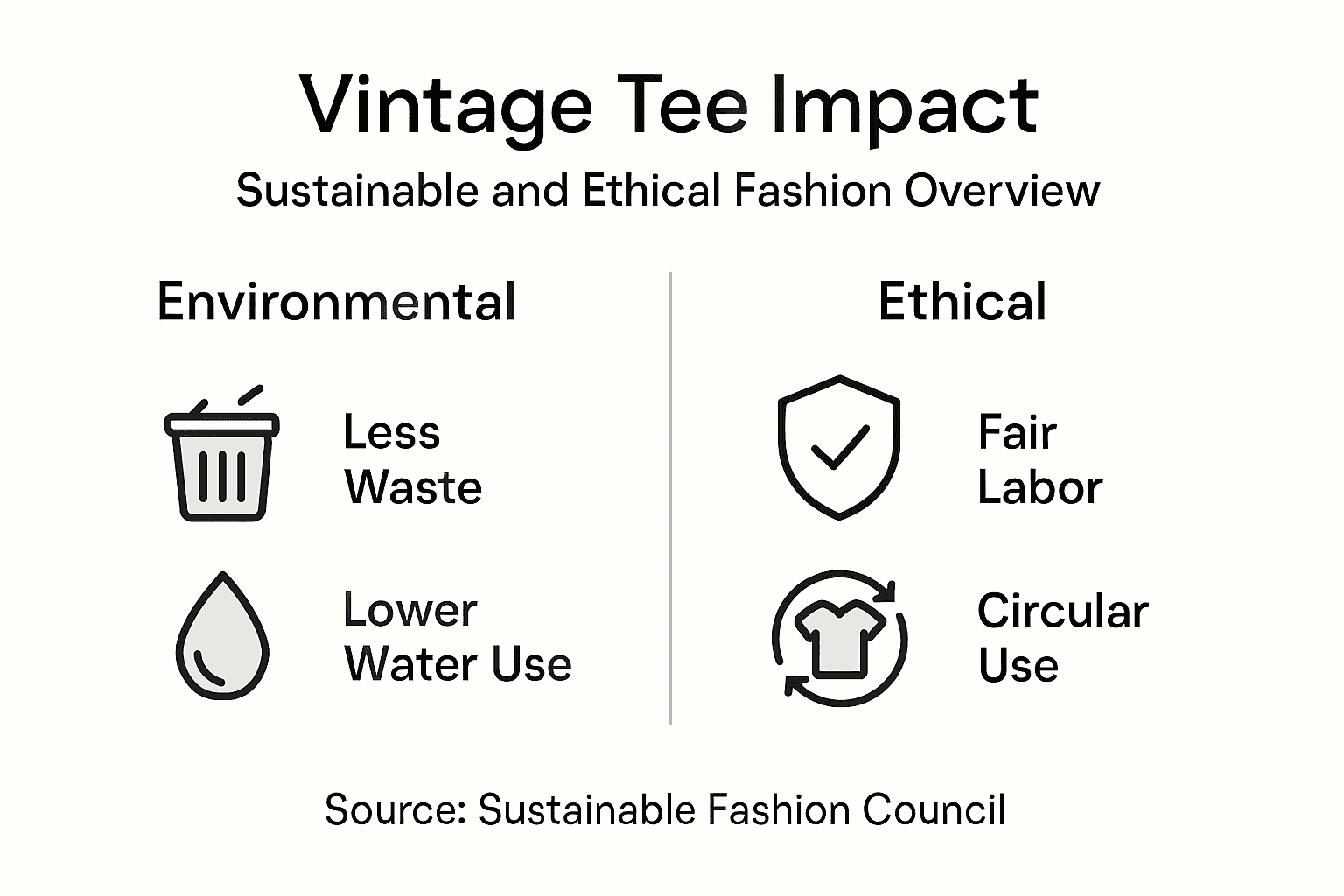
Beyond the environmental numbers, vintage tees connect you to something called the circular economy, which is essentially fashion’s antidote to fast fashion’s linear model. Fast fashion operates like this: manufacture, sell, wear briefly, discard, repeat. The circular economy works differently: garments get manufactured once, worn by multiple people across decades, and never reach a landfill. Every time you buy vintage, you’re participating in this circular loop. You’re the second or third or tenth owner of that shirt. Someone else might be the eleventh owner after you. Vintage tees exemplify the reduction of resource use by reusing garments created decades ago, which means the vintage fashion community contributes to circular economy models while supporting ethical consumption. This isn’t aspirational—it’s what actually happens when you choose vintage. The shirt keeps circulating instead of disappearing into waste. The vintage market has grown specifically because younger consumers understand this. You’re not doing this out of guilt or obligation. You’re doing it because buying vintage makes logical sense when you care about sustainability. It’s also worth noting that vintage shopping naturally slows down your consumption pattern. Thrift stores don’t operate like online fast fashion retailers. You can’t add 47 items to your cart with one click. You hunt. You browse. You find one piece that genuinely excites you. This slower, more intentional approach to acquiring clothes means you own fewer garments overall, which is itself sustainable. You wear pieces longer because you’ve invested time and thought into finding them. You develop relationships with your clothes instead of cycling through them.
The ethical dimension of vintage fashion extends beyond environmental impact into labor and cultural considerations. When you buy vintage, you’re not funding exploitative labor practices in garment factories. You’re not contributing to the system that pays garment workers poverty wages. The original manufacturer paid whatever they paid decades ago. The vintage seller typically runs a small business or operates a thrift store, often with considerably more transparency and ethics than major fast fashion corporations. For many millennials and Gen Z consumers, this matters tremendously. You want your money to reflect your values. You want to know where your clothes come from and who benefits from your purchase. Vintage fashion offers that clarity. There’s also a cultural and historical appreciation embedded in vintage consumption that goes beyond sustainability metrics. When you wear a vintage tee, you’re honoring the craftsmanship and design of a previous era. You’re saying that these garments deserve continued life rather than disposal. ChillStitch recognizes this intersection of style, story, and sustainability. The brand’s commitment to ethically sourced fabrics and quality printing mirrors the values that attract people to vintage in the first place. Both vintage and ethically contemporary clothing operate from the principle that garments should be made well enough to last, worn intentionally, and treated as meaningful objects rather than disposable commodities.
Pro tip: Build your vintage wardrobe strategically by choosing timeless silhouettes and graphics that will work across multiple seasons and style iterations, ensuring each piece stays wearable for years and maximizes the sustainability benefit of extending its lifecycle.
Risks in Authenticity and What to Avoid
The vintage tee market is booming. That means opportunity for you to find incredible pieces, but it also means opportunity for dishonest sellers to exploit the growing demand. Not everyone selling “vintage” tees is being truthful about what they’re offering. Some are deliberately deceiving you. Others are simply misinformed. Either way, you can end up with a counterfeit, a reproduction marketed as authentic, or a low-quality piece that falls apart after a few wears. Understanding the common scams and red flags protects both your wallet and your identity investment.
Consumers of vintage clothing face risks concerning authenticity including quality issues, cleanliness concerns, and misrepresentation where items are falsely marketed as authentic vintage. The most common deception you’ll encounter involves modern reproductions being sold as genuine vintage. A seller posts a shirt claiming it’s from 1985. The tag looks aged. The graphics appear faded. But closer inspection reveals the tag construction uses modern printing techniques. The fabric weight feels too light for authentic 1980s cotton. The printing method shows characteristics that didn’t exist in the original era. This is how you get tricked if you’re not careful. Another frequent scam involves counterfeit designer or band merchandise. Someone creates a fake vintage Ramones tee using a modern design and modern printing, then lists it with inflated pricing because people pay premium prices for authentic vintage band merch. The buyer thinks they’re getting a genuine piece of music history and cultural significance. Instead, they’re wearing manufactured deception. There’s also the problem of artificially distressed clothing being marketed as authentically worn vintage. A seller takes a modern shirt, intentionally damages it to look aged, then sells it as a piece with decades of actual wear history. The wear patterns don’t match how genuine vintage pieces age. The fading is too uniform. The damage looks manufactured rather than organic.
Beyond outright counterfeits, the commercialization of vintage fashion has introduced complexities in authenticity with the rise of imitators, reissues, and counterfeit goods challenging the vintage market. Licensed reproductions create a gray area. Brands sometimes officially re-release classic designs or produce authorized reproductions of vintage artwork. These are technically not counterfeit because they have permission and legal backing. But they’re also not actually vintage because they were manufactured recently. Some sellers blur this distinction deliberately. They list a licensed reproduction without clearly stating it’s a modern reissue, allowing buyers to assume it’s authentic vintage. This is dishonest even though the product itself is legal. Quality issues represent another major risk. A vintage tee might be authentic but damaged beyond wearability. Stains that won’t come out. Holes in the fabric. Pilling and degradation. Some sellers photograph their pieces strategically to hide these problems. The listing shows a perfect close-up of the graphic but never shows the back or the armpits where damage hides. When you receive it, you realize the piece is unwearable. This is why you need to ask detailed questions before purchasing. Request photos from multiple angles. Ask about any damage, stains, or odors. Authentic sellers with confidence will provide comprehensive documentation.
So what should you actually look for to avoid these problems? Start by understanding the specific markers of genuine vintage. Learn about tag construction from different eras. The 1970s used specific label designs that differ dramatically from 1980s or 1990s tags. Fabric content information was printed differently. Care instructions evolved. Once you know what authentic tags look like, you can identify fakes immediately. Check the printing method. Screen printing from the 1980s has a specific look that modern direct-to-garment printing cannot replicate. The ink sits differently on the fabric. The colors have different characteristics. Understanding these technical differences takes time to develop, but it’s essential knowledge for serious vintage buyers. Buy from reputable sources. Established vintage retailers and thrift stores have reputations to protect. They’re incentivized to authenticate pieces carefully. Online marketplaces like Depop or Grailed have buyer protection and community reviews. Individual sellers with strong histories and feedback are generally more trustworthy than brand new accounts posting professional product photos that look suspiciously perfect. Trust your instincts. If a deal seems too good to be true, it probably is. If a seller becomes defensive when you ask questions about authenticity, that’s a red flag. If the price is significantly lower than comparable pieces, question why. The vintage market has established price ranges based on era, condition, rarity, and provenance. Massive discounts often indicate problems. When you’re building your vintage wardrobe with intention, take time with your purchases. Avoid impulse buying. Research the seller’s feedback and return policy. Ask for detailed information. Request additional photos if needed. A legitimate seller will welcome your questions because they have nothing to hide. This careful approach takes longer than mindlessly adding items to a shopping cart, but it protects both your identity expression and your financial investment.
Use this table to understand key ways to spot genuine vintage tees when shopping:
| Feature to Check | Genuine Vintage Characteristic | Common Modern Reproduction Trait |
|---|---|---|
| Tag Construction | Woven label, unique fonts by decade | Heat-pressed or generic brand tags |
| Fabric Weight | Heavier, thicker cotton | Light, stretchy blends |
| Print Texture | Raised or cracked screenprint | Smooth, digital prints |
| Fading/Wear | Uneven, organic fading | Even, artificial distressing |
Pro tip: Before making any vintage purchase, request specific information about the shirt’s origin, any flaws or stains, tag markings, and manufacturing details, then cross-reference the tag style and construction details with authentic examples from that era to verify you’re getting genuine vintage rather than a modern reproduction or counterfeit.
Embrace Your Story with Vintage-Inspired Style from ChillStitch
Authentic vintage tees connect you with real moments in history and express your unique identity through retro graphics and stories. Yet, finding genuine pieces can be challenging because of counterfeits and confusing reproductions. If you want clothes that truly talk back and reflect who you are without compromising on quality or ethics, ChillStitch offers a smart alternative. Our collection of vintage-inspired tees, hoodies, and sweatshirts captures the spirit of nostalgia and cultural storytelling with humor and heart—all printed on ethically sourced fabrics.
Discover clothing designed to spark conversations and create connections while honoring sustainability and personal expression. Whether you want a cheeky slogan or a subtle nod to cult classics, ChillStitch helps you wear your values proudly today. Explore Clothes That Talk Back and make a statement that lasts beyond trends. Start your journey with us and say it loud, wear it proud at ChillStitch.com.
Frequently Asked Questions
What defines a vintage tee?
Vintage tees are typically garments produced at least 20 years ago that carry historical significance and authenticity, as opposed to modern reproductions designed to look vintage.
How can I tell if a tee is truly vintage?
To verify authenticity, check the tag construction, fabric weight, and printing methods. Genuine vintage tees often have distinct characteristics that differ from modern reproductions, such as older label designs and heavier fabric.
What are the different types of vintage tees?
Vintage tees can be categorized into several types: authentic vintage tees, vintage bootlegs, modern bootlegs, counterfeit tees, and licensed reproductions, each varying in authenticity and value.
Why are vintage tees considered sustainable fashion?
Wearing vintage tees extends their lifecycle and helps reduce textile waste. They bypass the environmental costs of new garment production and promote circular fashion by reusing existing items.
Recommended
- Why Choose Vintage Tees: Style, Story, and Sustainability – ChillStitchApparel
- 7 Essential Types of Vintage Tees Every Fan Should Know – ChillStitchApparel
- What Is Vintage Fashion? Complete Style Breakdown – ChillStitchApparel
- 7 Iconic Examples of Vintage Graphic Tees to Inspire You – ChillStitchApparel
- T-shirt Fashion in 2023