

Every truly iconic look starts with creativity at its core. For vintage graphic apparel fans, the difference between forgettable shirts and must-own pieces comes down to bold design identity and ethical choices. It’s no coincidence that American innovators lead a global wave where pop culture humor and sustainable fashion meet. This article uncovers how creative expression and ethical sourcing intersect, shaping the next era of graphic apparel for every collector and trend-setter.
Table of Contents
- Creativity As The Core Of Design Identity
- Types Of Creative Expression In Apparel
- How Creative Processes Shape Trends
- The Impact On Connection And Self-Expression
- Ethical Sourcing And Sustainable Innovation
- Risks, Pitfalls, And Avoiding Creative Stagnation
Key Takeaways
| Point | Details |
|---|---|
| Essence of Design Identity | Creativity transforms garments into narratives, balancing innovation and cultural resonance. |
| Creative Approaches | Leadership and adaptive creativity shape contemporary fashion, influencing aesthetic norms and personal expression. |
| Trend Formation | Fashion trends arise from inspiration and strategic design thinking, integrating cultural signals into wearable statements. |
| Sustainable Innovation | Ethical sourcing and technological advancements drive responsible practices, merging design excellence with ecological integrity. |
Creativity as the Core of Design Identity
Design identity emerges not just from fabric and stitches, but from the profound creative spirit infused into every garment. Clothing design creativity fundamentally transforms raw materials into narrative expressions that communicate far beyond their physical form. Designers don’t merely create clothing - they craft visual languages that speak to cultural moments, personal identities, and collective experiences.
At its essence, creative design identity represents a delicate balance between innovation and cultural resonance. Designers must navigate complex terrains of aesthetic trends, personal vision, and audience expectations. Some creative approaches emerge as leadership strategies that forge entirely new directions, while others represent adaptive creativity that subtly evolves existing design paradigms. The most compelling designs capture something quintessential about human experience - they become more than garments, transforming into wearable art that reflects our deepest cultural narratives.
The process of developing a distinctive design identity involves multiple sophisticated layers. Designers must understand color psychology, fabric dynamics, cultural symbolism, and emerging aesthetic trends. They synthesize these elements through a deeply personal lens, creating unique visual languages that resonate with specific audiences. Proportion, rhythm, balance, and color coordination become the fundamental grammar through which designers communicate their creative vision.
Pro Tip: Develop your design identity by keeping a consistent sketchbook that captures your evolving aesthetic sensibilities and cultural inspirations.
Types of Creative Expression in Apparel
Creativity in clothing design manifests through multiple nuanced pathways, each representing a unique approach to visual storytelling. Fashion design creativity encompasses diverse strategies that range from groundbreaking innovation to subtle evolutionary adaptations. Designers navigate complex creative landscapes by employing various expression techniques that transform basic fabric into powerful communication tools.
Three primary creative approaches dominate contemporary apparel design. First, leadership creativity represents radical paradigm shifts that challenge existing aesthetic norms, introducing entirely new visual languages. These designs often emerge from deep cultural insights, pushing boundaries and redefining how clothing communicates identity. Second, adaptive creativity focuses on evolutionary design, subtly integrating emerging trends while maintaining recognizable aesthetic frameworks. This approach allows designers to create familiar yet fresh visual experiences that resonate with broader audiences.
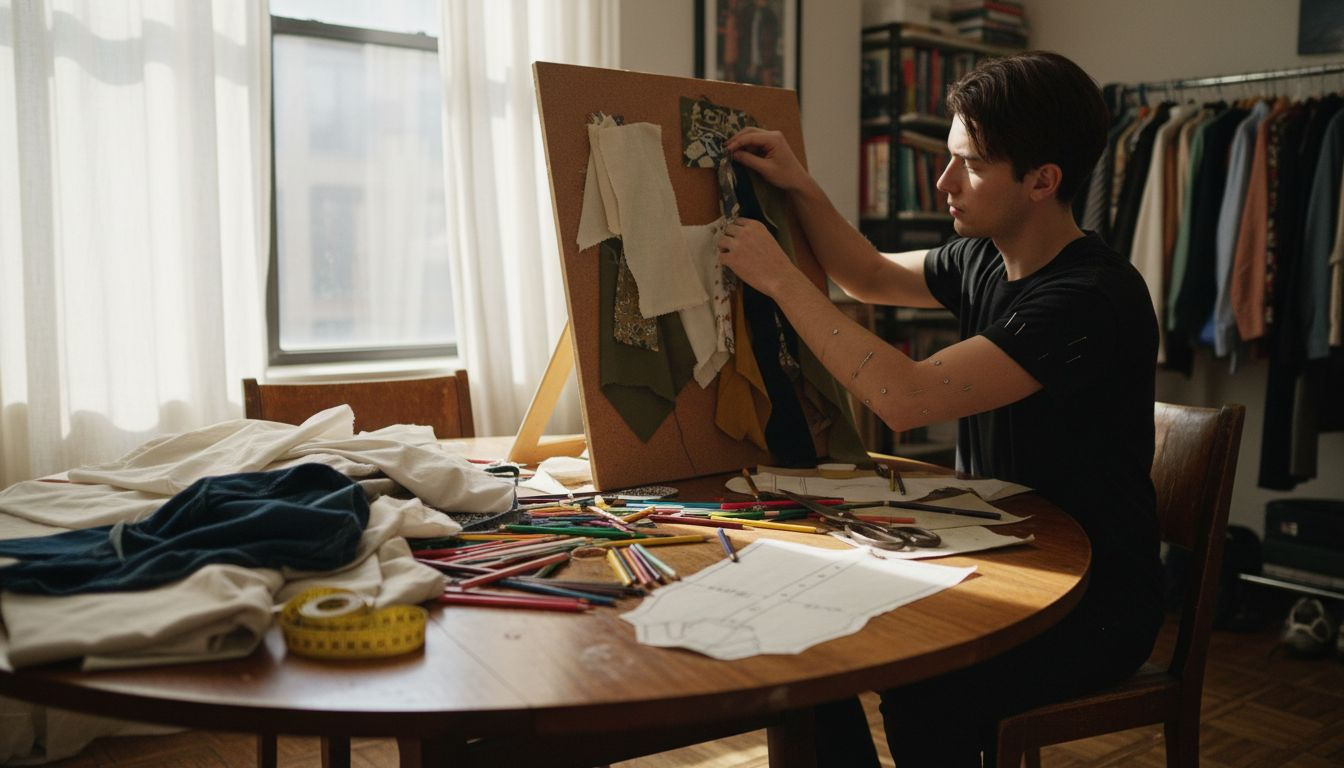
The third creative dimension involves intricate interplays between technical innovation, conceptual thinking, and cultural context. Designers draw inspiration from diverse sources - historical movements, societal shifts, technological advancements - transforming these influences into wearable narratives. Some focus on functional innovation, reimagining garment construction techniques, while others prioritize aesthetic expression, using color, texture, and silhouette to communicate complex emotional landscapes. The most compelling designs seamlessly blend these approaches, creating clothing that transcends mere utility to become profound cultural statements.
Here’s a comparison of key creative approaches in apparel design and their unique characteristics:
| Creative Approach | Main Focus | Impact on Fashion | Typical Example |
|---|---|---|---|
| Leadership Creativity | Radical new visual language | Drives major trend shifts | Avant-garde collections |
| Adaptive Creativity | Subtle evolution of trends | Ensures relevance | Classic styles updated |
| Functional Innovation | Improved garment function | Enhances usability | Eco-friendly materials |
| Aesthetic Expression | Emotional visual storytelling | Builds brand identity | Signature color palettes |
Pro Tip: Develop your unique design voice by maintaining a diverse inspiration collection that captures cultural moments, technological innovations, and personal emotional experiences.
How Creative Processes Shape Trends
Fashion trends emerge not from random chance, but through intricate creative processes that blend inspiration, cultural context, and strategic design thinking. Creative design methodologies reveal a complex ecosystem where ideas transform from initial sketches into global style movements. Designers navigate a sophisticated landscape of external influences, personal vision, and market dynamics, continuously iterating and refining concepts that ultimately define what people will wear.
The trend formation process typically involves three interconnected stages. First, inspiration gathering draws from diverse sources - historical archives, street culture, technological innovations, and global social movements. Designers collect visual and conceptual fragments, creating mood boards that capture emerging aesthetic sensibilities. Second, conceptual development transforms these raw inspirations into tangible design languages, where initial sketches undergo rigorous refinement. Collaborative feedback, material exploration, and technical experimentation help reshape original concepts into more nuanced, marketable expressions.
The final stage involves trend propagation and market integration, where creative concepts transition from design studios to wider cultural consciousness. Some design approaches emerge as leadership creativity, introducing radical new visual paradigms that challenge existing aesthetic norms. Others represent adaptive creativity, subtly evolving existing trends to maintain cultural relevance. Successful trend formation requires a delicate balance between innovation and familiarity, creating designs that feel simultaneously fresh and recognizable. The most compelling trends emerge when designers capture something fundamental about collective human experience, transforming clothing from mere fabric into powerful cultural statements.
Pro Tip: Develop trend awareness by maintaining a diverse inspiration archive that captures emerging cultural signals across art, technology, and social movements.
The Impact on Connection and Self-Expression
Clothing transcends mere fabric and function, emerging as a powerful language of personal narrative. Fashion design communicates identity through visual metaphors that speak volumes about individual experiences, cultural belonging, and emotional landscapes. Each garment becomes a canvas where personal stories are painted, allowing wearers to communicate complex inner worlds without uttering a single word.
The connection between clothing and self-expression operates through multiple intricate channels. Visual aesthetics serve as an immediate communication tool, signaling personality traits, cultural affiliations, and emotional states. Graphic elements, color choices, and design nuances become subtle yet profound statements about individual perspectives. Some individuals use clothing as a form of social resistance, challenging existing norms and creating visible representations of their unique identities. Others leverage fashion as a bridge, connecting with like-minded communities through shared visual languages and stylistic expressions.
Beyond individual expression, clothing design plays a critical role in broader social connections. Functional creativity allows designers to craft garments that not only communicate personal stories but also meet practical needs while nurturing emotional comfort. Different design approaches - from minimalist statements to bold graphic representations - enable wearers to negotiate complex social interactions, creating visual dialogues that transcend verbal communication. The most powerful designs emerge when technical functionality seamlessly integrates with emotional resonance, transforming clothing from a basic necessity into a dynamic medium of personal and collective expression.
Pro Tip: Experiment with clothing as a form of personal storytelling by selecting pieces that genuinely reflect your inner narrative and emotional landscape.
Ethical Sourcing and Sustainable Innovation
Sustainability in clothing design represents far more than an environmental trend - it’s a profound reimagining of industry practices and creative potential. Creative sustainability practices challenge designers to transform traditional production models, integrating ethical considerations into every stage of garment development. This approach demands innovative thinking that balances artistic expression with social and environmental responsibility.
The contemporary design landscape requires a holistic approach to sustainability that goes beyond material selection. Ethical sourcing involves complex negotiations between creative vision, manufacturing capabilities, and environmental impact. Designers now must consider intricate supply chains, worker conditions, carbon footprints, and material lifecycles. This expanded perspective transforms clothing production from a linear process into a nuanced ecosystem of interconnected choices. Some brands are pioneering approaches like closed-loop manufacturing, where garment materials can be fully recycled or biodegraded, representing a revolutionary shift in how we conceptualize clothing production.
Innovation emerges most powerfully when creativity directly confronts sustainability challenges. Technological advancements and material science breakthroughs are enabling designers to develop fabrics from unexpected sources - recycled plastics, agricultural waste, and regenerative biomaterials. These innovations aren’t compromises but exciting new creative frontiers that expand design possibilities while addressing critical environmental concerns. The most compelling sustainable designs demonstrate that ecological responsibility and aesthetic excellence are not opposing forces, but complementary expressions of human ingenuity.
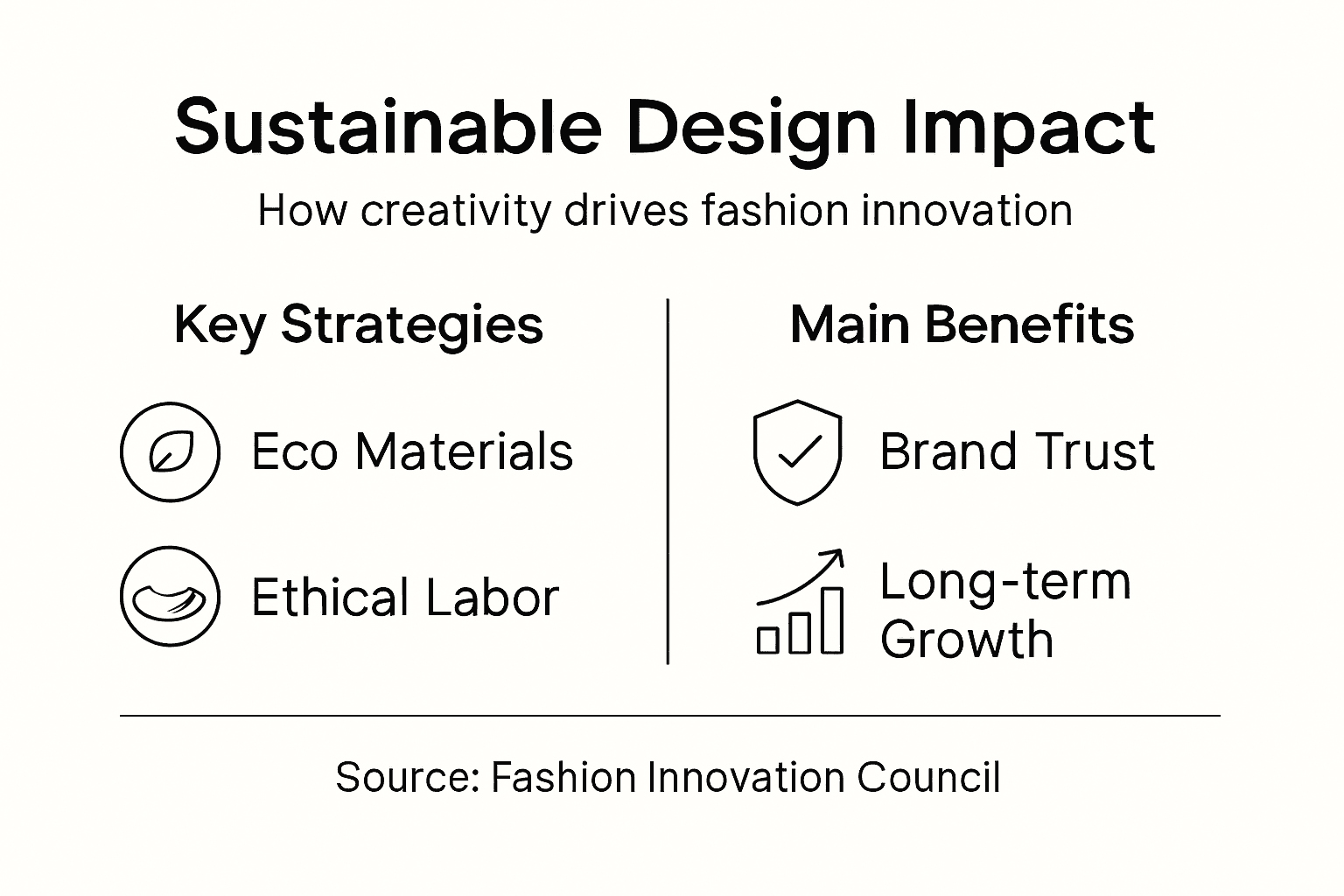
For quick reference, here are current sustainable innovation strategies in clothing design:
| Strategy | Description | Business Benefit |
|---|---|---|
| Ethical Sourcing | Responsible material procurement | Brand trust and loyalty |
| Closed-Loop Manufacturing | Full recyclability of garments | Reduced waste, lower costs |
| Regenerative Biomaterials | Use of renewable raw sources | Better environmental image |
| Worker Condition Audits | Monitoring fair labor standards | Avoids reputational risk |
Pro Tip: Research the environmental impact of your clothing choices by investigating fabric origins and manufacturing processes before making purchases.
Risks, Pitfalls, and Avoiding Creative Stagnation
Creative design is a delicate ecosystem constantly threatened by predictable patterns and market pressures. Creative challenges in fashion design reveal complex barriers that can trap designers in repetitive cycles of production. These risks manifest through multiple channels - market expectations, economic constraints, and psychological limitations that gradually erode innovative thinking.
The most significant threats to creative vitality emerge from internal and external sources. Market conformity represents a subtle yet powerful force that encourages designers to replicate successful formulas rather than explore uncharted territories. Economic pressures often push creators towards safe, predictable designs that guarantee short-term commercial success but ultimately diminish long-term creative potential. Psychological barriers like imposter syndrome, fear of rejection, and self-doubt can paralyze innovative thinking, transforming once-dynamic designers into risk-averse technicians who prioritize replication over imagination.
Overcoming creative stagnation requires deliberate, strategic interventions. Designers must cultivate psychological resilience and develop systematic approaches to maintaining creative momentum. This involves creating structured environments that encourage experimentation, embracing failure as a critical learning mechanism, and continuously challenging personal and industry assumptions. Successful creative practitioners often implement techniques like regular skill diversification, cross-disciplinary collaboration, and maintaining inspiration archives that constantly expose them to novel perspectives and emerging aesthetic languages.
Pro Tip: Establish a weekly practice of exploring creative works outside your primary design discipline to stimulate fresh perspectives and challenge ingrained thinking patterns.
Express Your Unique Design Identity with ChillStitch
The article highlights how creativity in clothing design goes beyond fabric into storytelling that connects culture, emotion, and personal identity. Designers face challenges like staying innovative without falling into repetition while balancing aesthetic expression and ethical sourcing. If you want your clothing to be a true extension of who you are, embracing bold visual languages and authentic self-expression is key. At ChillStitch, we understand that clothes are more than just garments — they are “Clothes That Talk Back” and “Your Hoodie. Your Statement.”
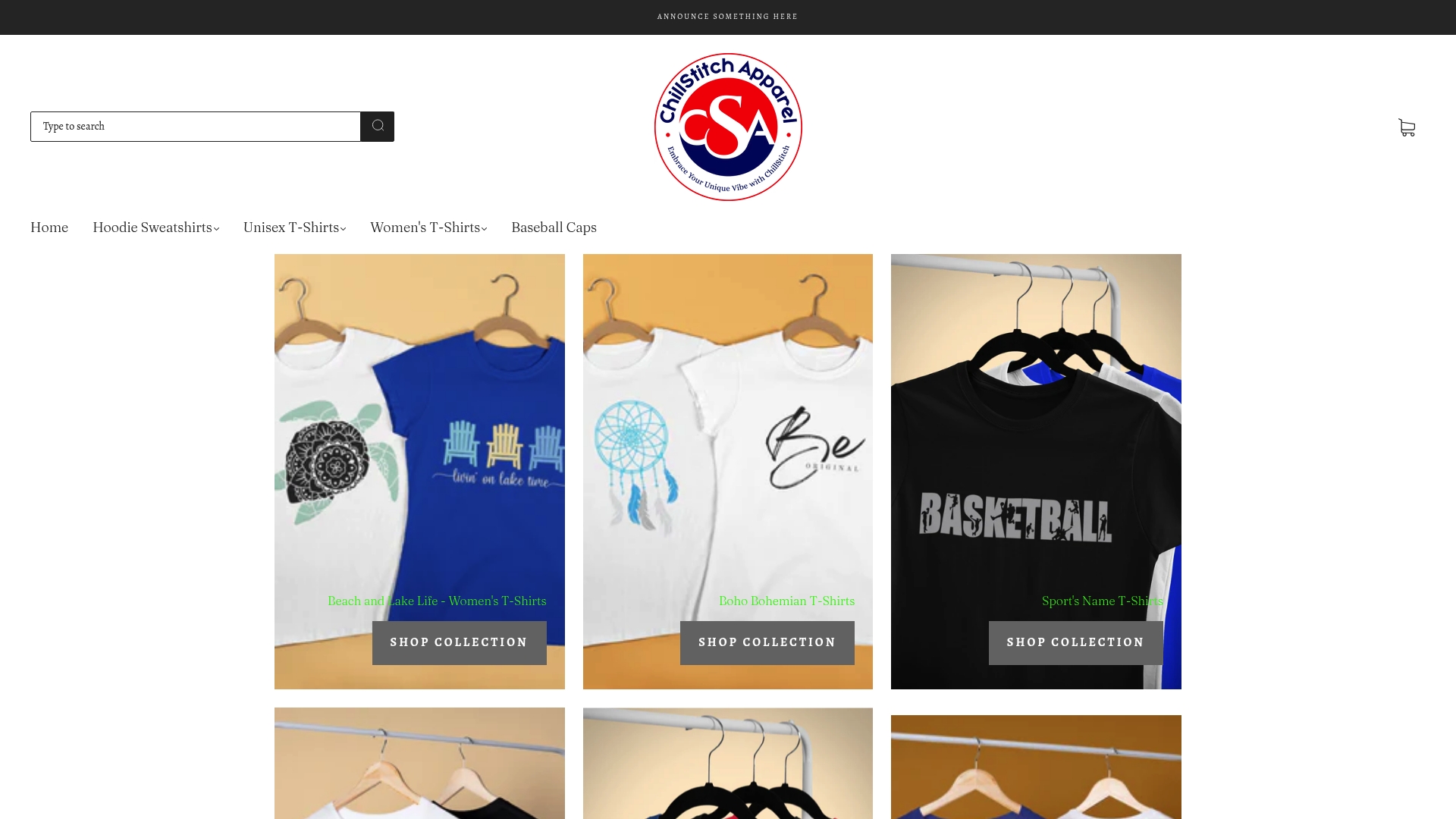
Ready to wear your personality with pride and spark real conversations? Explore our collection of vintage-inspired tees, hoodies, and sweatshirts that fuse humor, nostalgia, and heart. Each piece is ethically made and crafted to embody the creativity and connection celebrated in the article. Take the next step in creative self-expression by visiting ChillStitch today and discover how you can say it loud and wear it proud. Embrace the power of clothing designed to reflect your story now.
Frequently Asked Questions
What is the role of creativity in clothing design?
Creativity in clothing design transforms raw materials into narratives that communicate personal identities, cultural moments, and collective experiences. It helps designers create wearable art that reflects deep cultural narratives.
How do designers develop a unique design identity?
Designers develop a unique design identity by understanding color psychology, fabric dynamics, and emerging aesthetic trends, synthesizing these elements through a personal lens to create distinctive visual languages.
What are the main types of creative expression in apparel design?
The main types of creative expression in apparel design include leadership creativity (radical new visual languages), adaptive creativity (evolving existing trends), functional innovation (improved garment functionality), and aesthetic expression (emotional visual storytelling).
How do fashion trends emerge from creativity in design?
Fashion trends emerge through a complex process of inspiration gathering, conceptual development, and market integration. Designers collect influences, refine concepts, and introduce new visual paradigms to create trends that resonate culturally.
Recommended
- What Is Graphic Apparel and Why It Connects – ChillStitchApparel
- Why Tees Matter in Streetwear Culture Today – ChillStitchApparel
- 7 Creative Graphic Tee Ideas to Transform Your Closet – ChillStitchApparel
- Evolution of Graphic Tees: Complete Style Guide – ChillStitchApparel
- Understanding Hospitality Design Trends 2025 – Mats4U USA