

Scrolling through your closet only to realize your favorite retro t-shirt is actually from a 2020s reissue, not a thrifted relic from a classic British punk era? The line separating authentic vintage and truly retro is blurrier than a faded concert tee, and it means more than just cool graphics. For Millennial and Gen Z fans of ethical fashion, understanding retro t-shirt design is about embracing creativity, personal identity, and collective nostalgia while supporting sustainable production. If you crave bold pop culture nods mixed with truth about what makes a shirt ‘retro’, you’re about to get clarity with a healthy side of nostalgia.
Table of Contents
- Defining Retro T-Shirts And Common Misconceptions
- Major Eras And Influences In Retro Shirt Design
- Iconic Graphics, Slogans, And Pop Culture Moments
- Nostalgia, Identity, And Modern Vintage Revivals
- Ethical Fashion, Reissues, And Collectibility Trends
Key Takeaways
| Point | Details |
|---|---|
| Understanding Retro T-Shirts | Retro t-shirts are intentional designs that blend nostalgia with modern aesthetics, serving as cultural artifacts rather than simple reproductions of vintage clothing. |
| Significance of Eras | Different decades have uniquely influenced retro t-shirt design, reflecting key cultural movements and artistic expressions that resonate today. |
| Emotional Connections | These garments serve as powerful symbols of identity and collective memory, allowing wearers to engage with cultural narratives through fashion. |
| Ethical Considerations | The market has shifted toward valuing ethical production and authenticity in retro t-shirts, promoting sustainable practices in fashion consumption. |
Defining Retro T-Shirts and Common Misconceptions
Retro t-shirts are far more complex than most people realize. They represent a nuanced cultural phenomenon that blends nostalgia, personal identity, and creative reinterpretation of historical aesthetics. Unlike simple vintage clothing, retro designs are intentionally crafted to evoke memories and emotional connections while remaining distinctly modern.
At its core, retro t-shirt design is about reimagining past visual styles through a contemporary lens. Nostalgia marketing research reveals that these shirts are not mere reproductions but strategic cultural artifacts that allow wearers to express personal narratives. They tap into collective memory while offering fresh, creative interpretations of historical design elements.
Common misconceptions about retro t-shirts often stem from confusion with genuine vintage clothing. While vintage refers to authentic period items, retro designs are newly created products inspired by past trends. These shirts deliberately play with historical visual motifs, color palettes, and graphic styles to create something that feels simultaneously familiar and innovative. They aren’t attempts to perfectly replicate historical artifacts but rather creative reimaginings that speak to contemporary aesthetic sensibilities.
Pro tip: When shopping for retro t-shirts, look beyond surface-level nostalgia and consider how the design communicates a unique story or personal connection to cultural history.
Major Eras and Influences in Retro Shirt Design
Retro t-shirt design is a fascinating journey through cultural memory, reflecting the visual aesthetics and social dynamics of multiple decades. Fashion evolution research reveals how clothing styles cyclically resurge, with each era contributing unique graphic and stylistic elements that continue to inspire contemporary designers and fashion enthusiasts.
The mid-20th century produced particularly influential design movements. The 1960s introduced bold psychedelic graphics and vibrant color palettes that challenged traditional design norms. The 1970s brought counterculture imagery featuring peace signs, rock band aesthetics, and politically charged statements. By the 1980s, graphic t-shirts became canvases for pop art, corporate logos, and emerging consumer culture references that symbolized personal identity and social belonging.
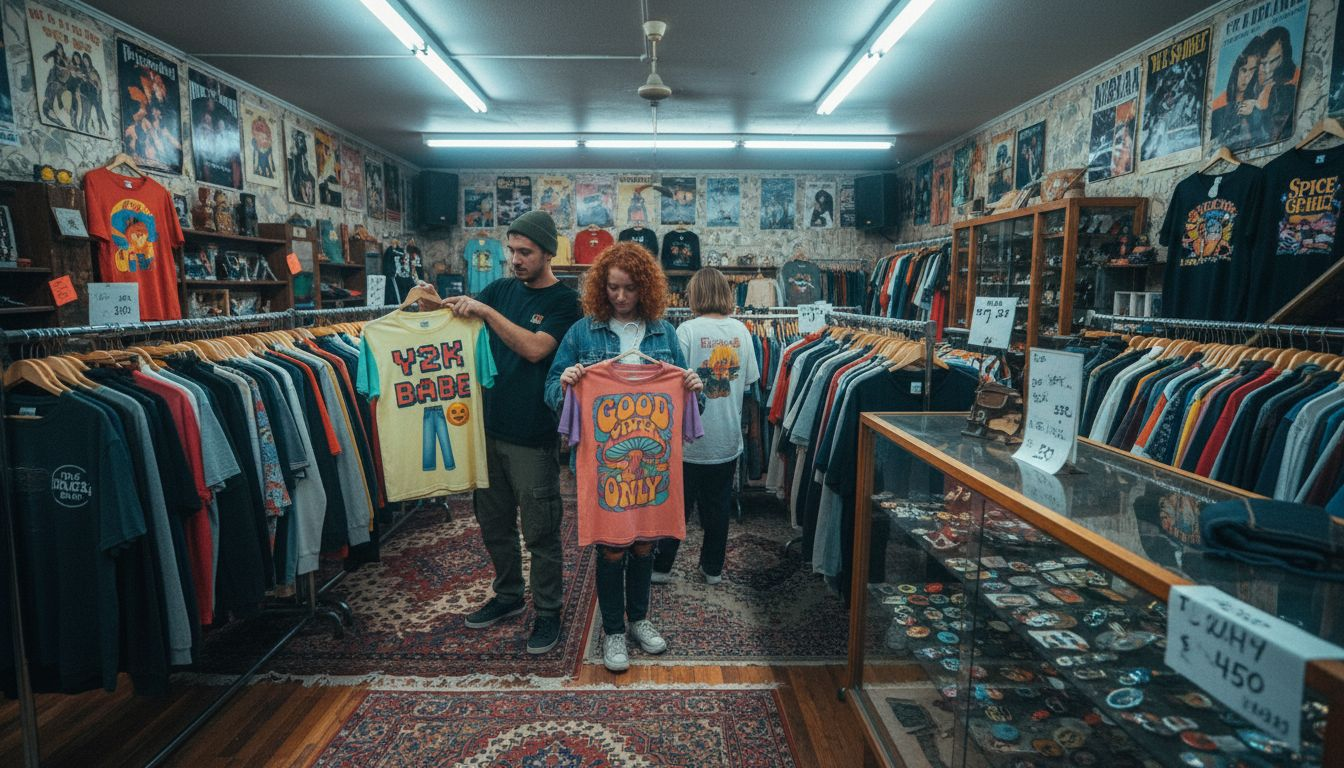
The late 1990s and early 2000s marked a pivotal moment in retro shirt design, particularly with the emergence of the Y2K aesthetic. Y2K style research demonstrates how technological optimism and futuristic motifs blended with nostalgic elements, creating a unique visual language that combined metallic textures, digital-inspired graphics, and playful typographic designs. This era represented a crucial turning point where technological anticipation merged with retrospective design sensibilities.
Pro tip: When exploring retro t-shirt designs, pay attention to the historical context and cultural narrative behind each graphic, as these shirts are more than just fashion statements—they’re visual time capsules.
Here’s a quick overview of the main retro t-shirt design eras and their distinct influences:
| Era | Key Graphic Elements | Social/Cultural Impact |
|---|---|---|
| 1960s | Psychedelic patterns | Challenged social norms |
| 1970s | Band logos, peace signs | Amplified counterculture |
| 1980s | Pop art, brand logos | Reflected consumer identity |
| 1990s/2000s (Y2K) | Metallic, digital motifs | Fused tech optimism, nostalgia |
Iconic Graphics, Slogans, and Pop Culture Moments
Retro t-shirts serve as powerful cultural artifacts that capture the essence of specific moments in time through provocative graphics and memorable slogans. Sports nostalgia research demonstrates how these wearable narratives create deep emotional connections, transforming simple garments into potent symbols of collective memory and personal identity.
Iconic graphics have consistently reflected the zeitgeist of their respective eras. The 1960s counterculture movement produced bold protest graphics and peace symbols that challenged societal norms. Rock band tour shirts from the 1970s became walking billboards of musical rebellion, while 1980s corporate logos and pop art designs represented emerging consumer culture. Movie franchises like Star Wars and pop culture phenomenons transformed t-shirts into canvases of shared cultural experiences, allowing wearers to communicate their personal affiliations and cultural allegiances without saying a word.
Slogans have played an equally significant role in defining retro t-shirt culture. Political statements, humorous one-liners, and brand catchphrases became powerful forms of self-expression. Cultural artifact analysis reveals that these graphics and slogans do more than decorate fabric—they document social movements, technological shifts, and collective emotional landscapes. From “Make Love, Not War” to ironic brand parodies, these t-shirts became microcosms of cultural commentary, allowing individuals to wear their beliefs and sense of humor.
Pro tip: Collect retro t-shirts that genuinely resonate with your personal narrative, focusing on designs that tell a meaningful story rather than just chasing trendy aesthetics.
Nostalgia, Identity, and Modern Vintage Revivals
Retro t-shirts have transformed from simple clothing items into powerful vehicles of personal storytelling and cultural expression. Vintage fashion research reveals that modern consumers are increasingly using vintage-inspired clothing as a means of constructing and communicating their authentic selves, strategically selecting designs that reflect personal histories and emotional connections.
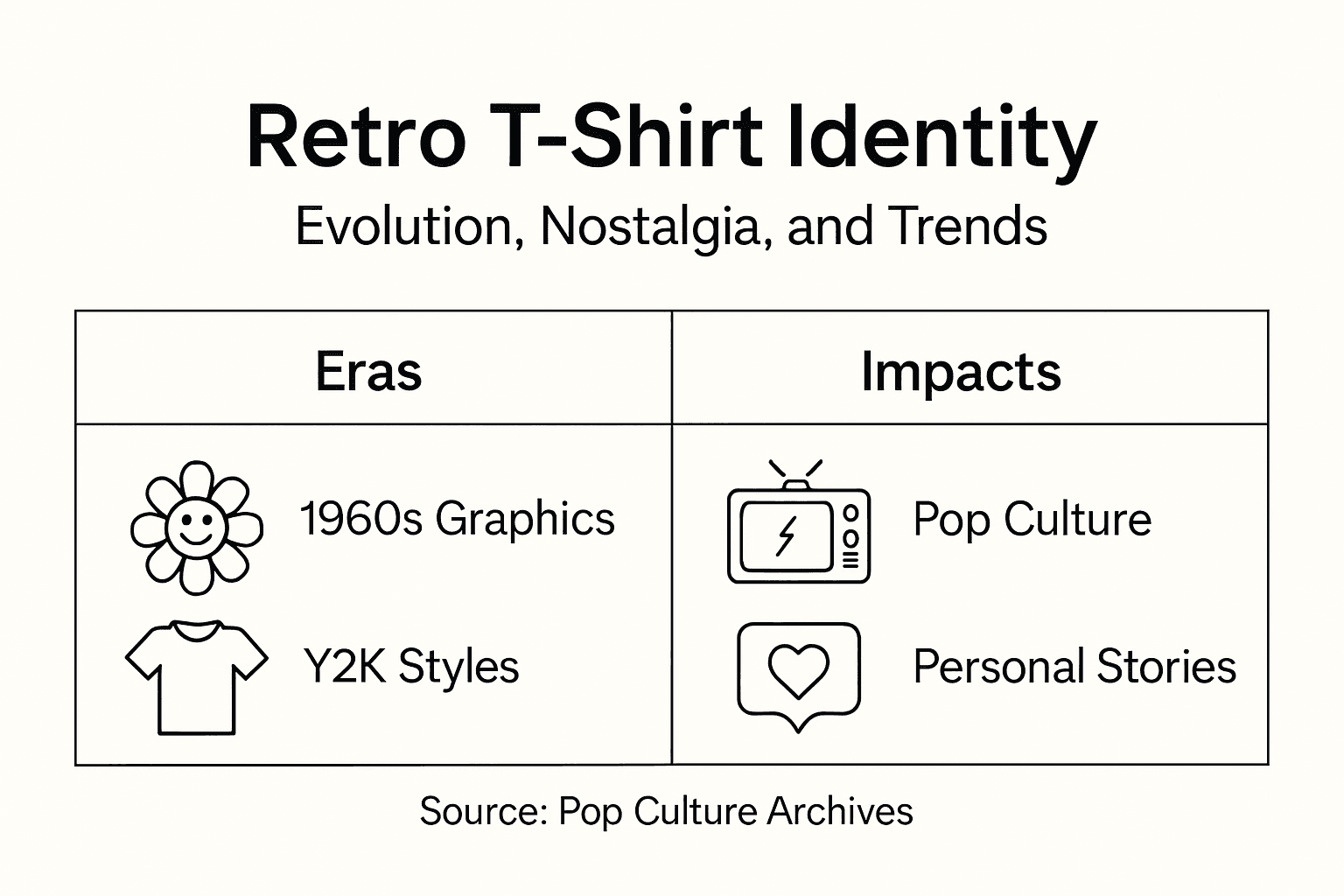
The psychological dynamics of nostalgia play a crucial role in driving the ongoing retro fashion renaissance. People don’t just wear these shirts; they curate narratives about their identities, generational experiences, and cultural affiliations. Sports fan apparel, music-themed graphics, and pop culture references become more than mere clothing—they’re emotional artifacts that bridge personal memories with broader collective experiences. Nostalgic merchandise research demonstrates how these garments serve as tangible connections to cherished moments, allowing individuals to signal group membership and emotional allegiances.
Modern vintage revivals represent a complex dialogue between past and present, where contemporary designers reinterpret historical aesthetics through a current lens. This isn’t simple reproduction but a nuanced conversation about cultural memory, personal identity, and ongoing social transformations. Young generations particularly leverage retro designs to challenge traditional narratives, reclaim forgotten cultural moments, and create new meanings from historical visual languages. The result is a dynamic, ever-evolving fashion ecosystem where authenticity trumps trend-chasing.
Pro tip: When collecting retro t-shirts, prioritize pieces that genuinely resonate with your personal story and cultural background, rather than simply following fleeting fashion trends.
Ethical Fashion, Reissues, and Collectibility Trends
The contemporary retro t-shirt market has evolved beyond mere fashion, transforming into a powerful platform for sustainable consumer choices and cultural preservation. Sustainable fashion research reveals how reissued vintage designs represent more than nostalgic artifacts—they are critical tools for reducing fashion’s environmental footprint by extending clothing lifecycles and minimizing waste.
Collectibility trends have dramatically shifted, with consumers now valuing authenticity, historical significance, and ethical production alongside aesthetic appeal. Rare vintage shirts are no longer just clothing items but investment pieces that tell complex cultural narratives. Collectors meticulously curate collections that represent specific historical moments, musical eras, or social movements, transforming t-shirts into tangible historical documents. Vintage fashion analysis demonstrates how these pieces transcend traditional fashion boundaries, becoming legitimate cultural artifacts with significant monetary and emotional value.
The rise of ethical fashion has fundamentally reshaped how consumers approach retro t-shirt collecting. Younger generations increasingly prioritize brands that demonstrate transparent supply chains, use sustainable materials, and respect both environmental and labor standards. This shift has prompted many manufacturers to reissue classic designs using eco-friendly production methods, creating a symbiotic relationship between nostalgia, sustainability, and responsible consumption. The result is a more conscious approach to fashion that celebrates historical design while maintaining a forward-thinking ethical perspective.
Pro tip: When collecting vintage t-shirts, research the production history and verify authenticity to ensure you’re investing in genuine, ethically sourced pieces.
The table below summarizes current retro t-shirt collecting trends and their broader significance:
| Collecting Trend | Description | Impact on Fashion Ecosystem |
|---|---|---|
| Authenticity | Focus on verified originals | Increases cultural value |
| Ethical Production | Eco-friendly materials, fair labor | Drives sustainable practices |
| Historical Significance | Relics of movements, events | Deepens personal connection |
| Investment Potential | Rare shirts as assets | Spurs growth in resale market |
Embrace Your Story with Retro-Inspired Tees That Speak
The history of retro t-shirts reveals how these garments do more than cover your body. They connect you to cultural moments, personal identity, and creative expression. If you want clothes that talk back and carry the spirit of nostalgia, humor, and individuality — ChillStitch.com offers exactly that. Our vintage-inspired t-shirts, hoodies, and sweatshirts bring retro graphics and slogans to life with ethically sourced fabrics printed with care and quality.
Explore our collection to find your perfect statement piece that captures your unique connection to pop culture and history. Whether it is a cheeky slogan hoodie, a subtle nod to your favorite cult-film moment, or a retro baseball tee, with Clothes That Spark Conversations you can say it loud and wear it proud. Don’t wait to transform your wardrobe into a canvas of identity and community — visit ChillStitch now and wear your story today.
Frequently Asked Questions
What defines a retro t-shirt?
Retro t-shirts are intentionally designed to evoke nostalgia and emotional connections using historical visual styles while incorporating modern aesthetics. They are different from vintage clothing, as they are newly created products inspired by past trends.
How do retro t-shirts differ from vintage clothing?
Retro t-shirts are contemporary designs inspired by historical aesthetics, while vintage clothing refers to authentic items from past eras. Retro designs focus on creative reinterpretation rather than direct reproduction of historical pieces.
What cultural impacts do retro t-shirts have?
Retro t-shirts serve as cultural artifacts that reflect personal identities and collective memories. They capture significant moments in time and allow wearers to express their affiliations with social movements, music, and pop culture.
Why is nostalgia important in the appeal of retro t-shirts?
Nostalgia plays a crucial role in the appeal of retro t-shirts as they allow individuals to connect with personal stories, generational experiences, and cultural histories. They serve as emotional artifacts that symbolize group membership and shared cultural narratives.
Recommended
- Complete Guide to Retro Tees: Style, Trends, Ethics – ChillStitchApparel
- 7 Smart Ways to Style and Choose Fun Retro T Shirts – ChillStitchApparel
- What Is Retro Graphic Tee? Nostalgia, Style, and Impact – ChillStitchApparel
- 7 Ways to Rock Retro Tshirt Designs for Unique Style – ChillStitchApparel
- how to get disposable camera pictures on your phone - Amateur Photographer Guide