

Most people know the feeling when a graphic tee turns strangers into instant friends at a party or campus event. For pop culture lovers, clothing is more than just something to wear—it is a living canvas for jokes, references, and memories. Clothing serves as a medium for personal narratives and identity expression, turning every graphic hoodie or funny slogan shirt into a statement before you ever say a word. Dive in to discover how the right designs let you wear your humor, nostalgia, and community on your sleeve.
Table of Contents
- Defining Clothing as a Canvas
- Types of Graphic Apparel and Their Meanings
- Pop Culture References and Nostalgic Appeal
- How Humor and Messaging Spark Connections
- Ethical Sourcing, Quality, and Expression
- Common Pitfalls and Authenticity Matters
Key Takeaways
| Point | Details |
|---|---|
| Clothing as Communication | Graphic apparel serves as a medium for expressing personal identity and narratives, turning outfits into conversation starters. |
| Type-Specific Messaging | Each type of graphic apparel conveys different strength and significance in its message, aligning with personal beliefs and community connections. |
| Embrace Authenticity | Authenticity in design, ethical sourcing, and quality manufacturing fosters genuine connections with audiences, ensuring your expression resonates. |
| Avoid Common Pitfalls | Be mindful of performative messaging, quality negligence, and overly generic designs, as they detract from authentic expressions and connections. |
Defining Clothing as a Canvas
Think about the last time you wore a shirt with a design that made someone stop and ask about it. That moment right there—that’s clothing functioning as a canvas. But what does that actually mean beyond the surface level?
Clothing as a canvas goes far beyond just being fabric with ink printed on it. When you wear graphic apparel, you’re not simply covering your body. You’re displaying a piece of communication, a statement about who you are or what you value. Clothing serves as a medium for personal narratives and identity expression, transforming ordinary garments into vehicles for meaning. Your retro band tee isn’t just nostalgia—it’s a declaration that you connect with that era, that music, that feeling. A hoodie with a cult film reference becomes a beacon for others who “get it,” a silent membership card to a community of people who share your sense of humor and taste.
What makes this concept powerful is that the canvas concept extends beyond mere utility to become a surface for artistic expression and communication. Your shirt is having a conversation before you even speak. When you choose to wear a piece from ChillStitch—whether it’s something funny, nostalgic, or deliberately cheeky—you’re making an intentional choice about what you want the world to see. That’s the difference between a plain white tee and one with actual personality. The graphic becomes the voice, the print becomes the statement, and the fabric becomes the medium through which you express something authentic about yourself.
This is why graphic apparel hits differently for the 18 to 35 crowd. You’ve grown up in an era where identity expression is everything. You use fashion to signal allegiance to communities, to show you understand reference culture, to prove you have taste and humor. When you wear a piece that resonates, it’s not vanity—it’s connection. It’s your way of saying “I exist in this cultural moment, and here’s my corner of it.” That’s what we mean when we say “Clothes That Talk Back.”
Pro tip: Choose graphic pieces that genuinely make you pause and smile when you see them, not ones you feel obligated to wear—the designs you actually love will feel natural on you and spark better conversations with people who notice them.
Types of Graphic Apparel and Their Meanings
Not all graphic apparel works the same way or sends the same message. The type of piece you choose—and the design you pick—shapes what story you’re telling. Understanding these differences helps you find pieces that actually fit who you are and what you want to say.
Statement tees and slogans are the most direct form of graphic communication. These are your “I have an opinion” pieces. A shirt with a witty one-liner, a cultural reference, or a bold statement makes you unmistakably clear about where you stand or what you find funny. Then there are graphic tees featuring artistic illustrations or iconography, which communicate something more nuanced. A vintage film poster design or an abstract illustration says something about your aesthetic sensibility without spelling it out. The difference matters. A slogan makes a declaration. An illustration invites interpretation. Hoodies and sweatshirts with graphics function differently than tees because they’re layering pieces—they become part of your silhouette, your everyday armor. A hoodie is more immersive, more all-in. It says “this matters to my core identity.” Tank tops and accessories take a lighter approach, perfect for those moments when you want to signal affiliation without the commitment of a full-coverage piece. Designer graphic pieces often incorporate unique artistic elements and high-quality materials, elevating the entire experience from casual wear to intentional fashion.
What ties all of this together is that each type communicates personal beliefs, identity, or values through powerful visual language. Your choice of format matters just as much as your choice of design. A graphic hoodie from ChillStitch isn’t just comfortable—it’s a commitment. You’re wrapping yourself in a statement. A retro baseball tee is nostalgic shorthand for “I appreciate where we’ve been.” A cheeky tank top layered under something else is a secret handshake with people who notice the details. When you understand these distinctions, you can choose pieces that feel authentic instead of just grabbing whatever’s available. You’re not just wearing something. You’re wearing the right something, the right way, for the right reasons. That’s when clothing stops being background noise and becomes actual conversation.
Here’s a comparison of graphic apparel types and the impact of their design choices:
| Apparel Type | Typical Use | Message Strength | Social Signal |
|---|---|---|---|
| Statement Tee/Slogan | Everyday expression | Direct and bold | Clear opinion, invites instant recognition |
| Illustrated Tee | Showcasing aesthetic | Subtle and interpretive | Visual taste, sparks conversation through shared interest |
| Graphic Hoodie | Personal identity layer | Deep and immersive | Core identity, long-term community belonging |
| Tank Top/Accessory | Light signaling | Casual and playful | Low-commitment affiliation, secondary social cue |
| Designer Piece | Fashion-forward statement | Artistic and high-status | Unique taste, signals investment in design and quality |
Pro tip: Start with a core piece like a classic graphic tee or hoodie that genuinely resonates with you, then build outward with complementary designs rather than trying to wear too many conflicting messages at once.
Pop Culture References and Nostalgic Appeal
Why does a shirt with a 1980s movie poster or a reference to a show that ended years ago hit so hard? Because nostalgia isn’t just about missing the past—it’s about claiming it as part of your identity. Pop culture references on graphic apparel work like a time machine printed in ink. They transport you back to a moment that mattered, and they signal to everyone around you that you were there (in spirit, at least) or that you appreciate what came before.

Nostalgia in graphic apparel taps into something real. You grew up with certain movies, shows, music, and cultural moments that shaped how you see the world. When you wear a vintage band tee or a design that references a cult classic film, you’re not being corny or stuck in the past. You’re saying “this thing still matters to me, and I want to celebrate it.” That’s powerful. Retro aesthetics connect young consumers to cultural heritage, blending comfort with historical styles in ways that feel both personal and communal. A graphic hoodie featuring a throwback reference becomes a conversation starter because it signals taste, cultural literacy, and a willingness to stand out.
What makes pop culture references work on graphic apparel is timing and execution. A design that hits the exact right note of humor or reverence makes you feel understood. It’s the difference between a generic retro aesthetic and an actual cultural moment captured in fabric. When ChillStitch designs pieces around specific references—whether it’s a cheeky nod to a beloved film or a witty play on 90s aesthetics—they’re banking on the fact that you get it. You lived through it or you appreciate it enough to wear it. That shared understanding builds community. Suddenly, the person who notices your shirt isn’t just someone walking by. They’re someone in your tribe, someone who appreciates the same cultural touchstones.
The brilliance of wearing pop culture references is that they age like fine wine. A shirt with a reference that seemed funny five years ago might feel even more meaningful now, especially as we collectively process how much culture shapes us. Nostalgia isn’t laziness or resistance to the present. It’s a way of honoring what resonated with you, what made you laugh, what felt important. When you wear it, you’re not hiding from the future. You’re celebrating the past as part of who you are right now.
Pro tip: Choose pop culture references that genuinely bring you joy or make you laugh rather than pieces that feel trendy just because they’re retro, so your nostalgia reads as authentic rather than performance.
How Humor and Messaging Spark Connections
There’s a reason you stop and stare at certain graphics on a shirt. Sometimes it’s because the design is visually striking. But more often, it’s because something about the message or the humor makes you feel seen. That moment of recognition, that laugh, that nod of understanding—that’s when graphic apparel stops being clothing and becomes a connector.
Humor on graphic apparel does something special. It disarms people. When someone sees a witty slogan or a cheeky design on your chest, their guard drops. They’re more likely to smile, to engage, to start a conversation. Humor in graphic design enhances memorability and fosters positive emotional responses, which means your shirt isn’t just making a statement—it’s creating an emotional bridge between you and the people who notice it. A piece from ChillStitch with the right joke or clever reference doesn’t just exist on your body. It actively works to connect you to people who appreciate the same sensibility. The humor becomes an invitation. It says “if you get this, we’re already friends.”
What makes messaging effective on apparel is specificity. Vague statements about positivity or generic motivational slogans blend into background noise. But a message that hits a particular cultural moment, references something specific, or articulates something people have been thinking but haven’t seen articulated—that sticks. Humorous messaging in apparel design improves emotional resonance and connection with audiences by triggering both cognitive engagement and emotional response. When you wear something with a message that makes someone pause and think “yes, exactly,” you’ve created a moment of genuine connection. That person feels understood because the apparel expressed something they felt but couldn’t quite put into words. Suddenly, you’re not strangers. You’re two people who see the world the same way.
The brilliance of combining humor with clear messaging is that it balances authenticity with approachability. Humor keeps things light and fun, preventing your statement from feeling preachy or heavy-handed. Messaging gives the humor direction and purpose. Together, they create pieces that make people want to engage with you, ask about your shirt, and feel like they’ve discovered something worth discussing. That’s connection. That’s why a graphic tee becomes a conversation starter instead of just another piece of clothing.
Pro tip: Choose humor and messaging combinations that feel genuine to your personality rather than trying to appeal to everyone, because authenticity is what actually sparks real conversations with your people.
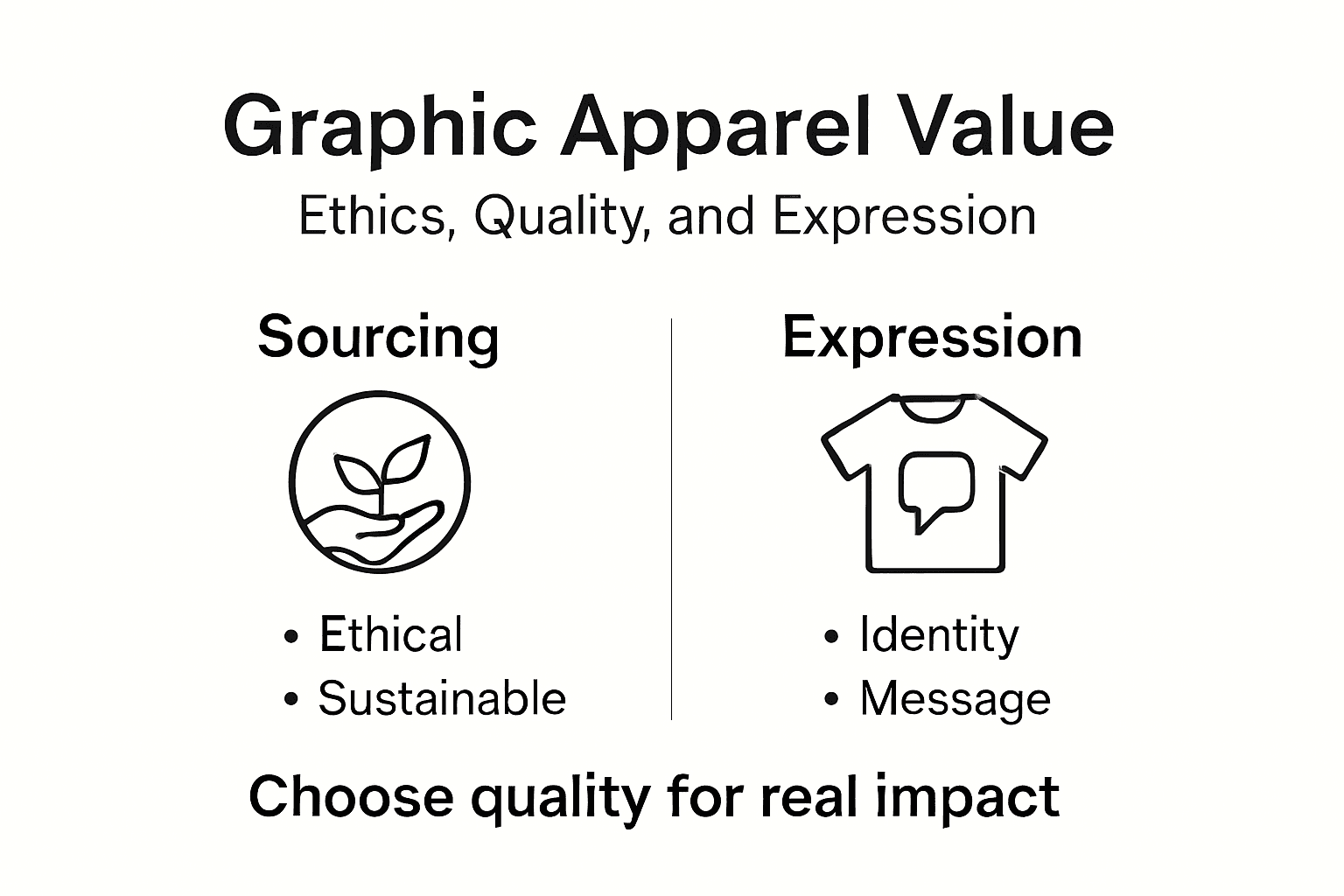
Ethical Sourcing, Quality, and Expression
Here’s something that matters but doesn’t always get talked about: the shirt on your back has a story before it becomes your statement. Where it came from, who made it, what it’s made of—these things are part of what you’re actually wearing. When you choose graphic apparel, you’re not just buying a design. You’re participating in a system. ChillStitch understands this, which is why ethical sourcing and quality aren’t afterthoughts. They’re foundational to what makes expression actually meaningful.
Why does this matter to you? Because when you wear something, you want to feel good about it. Not just aesthetically, but morally. Ethical sourcing in fashion involves fair labor practices, transparency in supply chains, and environmental consideration, which means your piece wasn’t made at the cost of someone else’s wellbeing or the planet’s health. That matters. It means the person who printed your design worked in safe conditions. The fabric wasn’t sourced through exploitative channels. The dyes and materials didn’t poison waterways or communities. When you understand this, wearing a piece becomes less about consumption and more about alignment. You’re not just saying something with your shirt. You’re backing it up with your choices.
Quality ties directly into expression. A design printed on cheap, thin fabric that falls apart after a few washes isn’t really expressing anything—it’s just noise. But a graphic tee printed on durable, ethically sourced material? That lasts. That stays vibrant. That feels good on your skin and holds its shape. Consumers increasingly value brands that prioritize sustainable materials and safe working conditions, which enhances brand trust and aligns with global sustainability goals. Quality matters because your statement deserves to be heard more than once. Your favorite design, the one that makes you smile every time you see it, should survive multiple washes and years of wear. That longevity is respect—respect for the design, respect for your body, respect for the people who made it.
When you combine ethical sourcing, quality construction, and intentional design, something shifts. Your graphic apparel becomes something you’re genuinely proud to wear, not just something you grabbed because it looked cool. You know the story behind it. You know it was made responsibly. You know it will last. That confidence translates. People notice when you’re wearing something you truly believe in. Your expression becomes more authentic because it’s backed by integrity.
Pro tip: Before purchasing graphic apparel, check the brand’s sourcing information and material quality—pieces made from ethically sourced fabrics with transparent production practices will maintain their impact and integrity longer than cheap alternatives.
Common Pitfalls and Authenticity Matters
Not every graphic tee succeeds at connecting people. Some fall flat. Some feel forced. Some make you cringe the moment you put them on. The difference between pieces that genuinely spark connection and those that don’t often comes down to authenticity. When brands or individuals approach graphic apparel inauthentically, people sense it immediately. That disconnect kills the whole purpose.
One major pitfall is performative messaging. This happens when a design tries too hard to seem relatable or trendy without actually meaning anything. A slogan that’s clearly designed to go viral rather than express something genuine reads as hollow. Similarly, brand authenticity requires genuine ethical behavior, not just surface-level claims that lead to consumer skepticism. When a brand talks about sustainability but sources materials cheaply or treats workers poorly, people notice. Social media has made it nearly impossible to hide these inconsistencies. Authenticity demands alignment between what you claim and what you actually do. If your graphic apparel tells a story about caring, but the production process tells a different story, the design loses its power.
Another pitfall is quality negligence. You can have the most brilliant design in the world, but if common garment defects like stitching flaws and seam slippage damage the product’s integrity, your message literally falls apart. A shirt that unravels after three washes can’t carry your expression forward. It becomes an embarrassment instead of a statement. Quality assurance matters because it shows respect for both the wearer and the design itself. When you wear something that’s falling apart, it sends the opposite message you intended.
The third pitfall is trying to appeal to everyone. Generic designs that attempt universal appeal end up meaning nothing to anyone. Graphic apparel works best when it’s specific, when it speaks to a particular community or cultural moment. The pieces that spark real connection are the ones that take a stance, that aren’t afraid to be niche. Your target audience might be smaller, but they’ll actually care. They’ll feel seen. That specificity is what creates genuine community, not broad appeal.
Authenticity isn’t about perfection. It’s about honesty. It’s about knowing what you actually stand for and letting that guide your choices, from design to sourcing to construction. When everything aligns, when the message matches the quality and the values, that’s when graphic apparel becomes what it’s meant to be: a real conversation starter with real substance behind it.
To help you avoid common pitfalls, here is a summary of frequent mistakes in graphic apparel and why authenticity matters:
| Pitfall | Why It Fails | Impact on Connection |
|---|---|---|
| Performative Messaging | Feels forced or insincere | Audience distrusts the intention |
| Quality Negligence | Clothing falls apart quickly | Distracts from message, causes regret |
| Overly Generic Design | Lacks distinctive personality | Fails to spark meaningful discussion |
| Inauthentic Branding | Disconnect between claims/actions | Damages trust and credibility |
Pro tip: Before wearing or creating graphic apparel, ask yourself if you genuinely believe in the message and if the quality backs up what you’re saying—if the answer is no to either, it’s not ready.
Turn Your Clothing Into a Conversation Starter Today
Struggling to find graphic apparel that truly speaks your language and reflects your unique personality? The challenge is real when inauthentic, low-quality pieces fail to express what you genuinely believe or connect you to communities that matter. At ChillStitch, we understand the power of clothing as a canvas—a way to wear your humor, nostalgia, and identity proudly without compromise. Our tees, hoodies, and sweatshirts are thoughtfully designed to spark conversations, making you stand out with meaningful messages and pop culture references printed on ethically sourced, high-quality fabrics.
Don’t settle for generic or fleeting trends. Choose pieces that talk back and wear your statement with confidence. Explore our collection now to find your perfect graphic hoodie or retro tee that fits who you are at ChillStitch. Let your wardrobe become a genuine expression of your story because clothes that spark conversations are just a click away. Start turning heads and making connections today at Clothes That Talk Back.
Frequently Asked Questions
What does it mean for clothing to function as a canvas?
Clothing as a canvas means that garments, especially graphic apparel, serve as a medium for personal narratives and identity expression. They convey messages about who you are and what you value, transforming your outfit into an intentional statement rather than just covering your body.
How can I choose graphic apparel that feels authentic to me?
Select graphic pieces that genuinely resonate with you and make you smile. Avoid designs that you feel obligated to wear or that seem trendy for the sake of it. Authenticity comes from wearing designs that truly reflect your personality and interests.
What are the main types of graphic apparel and their unique messages?
Graphic apparel types include statement tees that communicate direct opinions, illustrated tees that showcase aesthetic sensibility, graphic hoodies that represent core identity, and tank tops or accessories that provide casual signaling. Each type offers a different way to express yourself visually.
Why is ethical sourcing important in graphic apparel?
Ethical sourcing ensures that garments are made under fair labor practices and environmentally considerate methods. When you choose ethically sourced graphic apparel, you’re supporting responsible production processes that respect the people who make the clothing and the planet they inhabit.
Recommended
- What Is Graphic Apparel and Why It Connects – ChillStitchApparel
- Understanding Why Graphic Tees Matter in Fashion – ChillStitchApparel
- History of Graphic Tees: Pop Culture’s Wearable Story – ChillStitchApparel
- Role of Graphic Tees: Everything You Need to Know – ChillStitchApparel
- Balenciaga Black Cotton Logo Print Crew Neck Short Sleeves T-shirt