

Finding graphic apparel that actually means something and connects you with others can feel like a wild quest in the world of pop culture fashion. For those who crave more than mass-produced memes, the rise of community-driven clothing points to a new direction where design, humor, and nostalgia meet real social impact. This deep dive explores how collective creativity, ethical sourcing, and shared storytelling are changing the way pop culture enthusiasts wear their favorite references while building stronger communities.
Table of Contents
- Defining Community-Driven Clothing and Misconceptions
- Models and Variations of Community-Driven Apparel
- How Community-Driven Clothing Sparks Connection
- Ethical Sourcing and Sustainability Benefits
- Risks, Challenges, and What to Avoid
Key Takeaways
| Point | Details |
|---|---|
| Community-Driven Clothing | This movement emphasizes collaboration, ethical production, and social impact, redefining fashion beyond mere transactions. |
| Models and Variations | Diverse models like localized supply chains and participatory design promote community engagement and sustainability in fashion. |
| Connection and Identity | Clothing serves as a medium for storytelling and connection, fostering strong social networks and shared values. |
| Risks and Challenges | Awareness of potential pitfalls like greenwashing and exclusion is essential for maintaining authentic and impactful initiatives. |
Defining Community-Driven Clothing and Misconceptions
Community-driven clothing represents more than just fabric and thread. It’s a powerful movement transforming how we view fashion, connection, and social impact. Unlike traditional retail models, this approach centers on collaborative design, ethical production, and shared storytelling that transcends mere commercial transactions.
At its core, community-driven clothing involves collective participation where multiple stakeholders contribute to design, production, and meaning. Sustainable fashion initiatives demonstrate how these collaborative practices extend beyond simple manufacturing into complex social innovation frameworks. The key distinguishing factors include:
- Direct community involvement in design processes
- Emphasis on ethical and transparent production methods
- Prioritizing social and environmental sustainability
- Creating economic opportunities within local networks
Many people mistakenly view community-driven clothing as just another marketing trend or recycling initiative. However, community clothing models represent a profound reimagining of fashion’s potential for social empowerment. These initiatives aren’t about selling products but building meaningful connections that challenge traditional consumer-brand relationships.
The misconceptions surrounding community-driven clothing often stem from a limited understanding of its holistic approach. It’s not just about creating sustainable garments, but about generating social value, preserving cultural narratives, and creating economic pathways for marginalized communities. By centering human stories and collective creativity, these clothing models transform fashion from a transactional experience into a deeply collaborative expression of identity.
Pro tip: When exploring community-driven clothing, look beyond the product and examine the story, people, and impact behind each garment.
Models and Variations of Community-Driven Apparel
Community-driven apparel represents a dynamic spectrum of models that challenge traditional fashion production and consumption paradigms. Each variation reflects unique approaches to collaborative design, social impact, and sustainable practices that reimagine clothing as a collective endeavor.
Localized Supply Chain Models emerge as one of the most compelling variations, where community-led supply networks transform clothing production. These models prioritize:
- Distributed social production networks
- Local economic empowerment
- Circular economy strategies
- Garment repair and modular design
- Direct stakeholder participation
Another fascinating variation involves second-hand clothing ecosystems, which create robust reuse networks that transcend simple donation models. Sustainable consumption behaviors demonstrate how these approaches are driven by complex social dynamics, including community awareness and shared economic goals.
These models differ significantly across cultural contexts, reflecting local economic conditions, social structures, and community values. Some focus on artisan craftsmanship, others on technological innovation, but all share a fundamental commitment to transforming fashion from a transactional industry into a collaborative social experience.
Participatory design represents another critical model, where community members aren’t just consumers but active co-creators. This approach democratizes fashion, allowing individuals to contribute design ideas, provide feedback, and shape production processes directly.
Here’s a comparison of popular community-driven apparel models and their unique strengths:
| Model Type | Primary Focus | Community Benefit | Typical Challenges |
|---|---|---|---|
| Localized Supply Chain | Regional production | Local job creation | Limited scalability |
| Second-hand Ecosystem | Clothing reuse & redistribution | Affordable access to apparel | Variable garment quality |
| Participatory Design | Collaborative development | Creative empowerment | Coordinating preferences |
| Artisan-Centered | Craftsmanship preservation | Heritage sustainability | Limited market reach |
Pro tip: Explore community-driven apparel models by connecting with local makers, attending clothing swap events, and supporting brands that prioritize collective design processes.
How Community-Driven Clothing Sparks Connection
Clothing transcends mere fabric and design - it’s a powerful medium for human connection, storytelling, and collective identity. Community-driven clothing transforms fashion from a transactional experience into a vibrant social dialogue that bridges individual experiences and shared narratives.
Community clothing initiatives create profound social connections through several key mechanisms:
- Shared emotional experiences
- Collaborative design processes
- Mutual trust and understanding
- Collective problem-solving
- Breaking traditional consumer-brand boundaries
These initiatives go beyond simple transactions by fostering deep interpersonal bonds. When communities participate in clothing production and design, they create meaningful social networks that extend far beyond traditional marketplace interactions. The clothing becomes a tangible representation of collective identity, shared values, and mutual support.
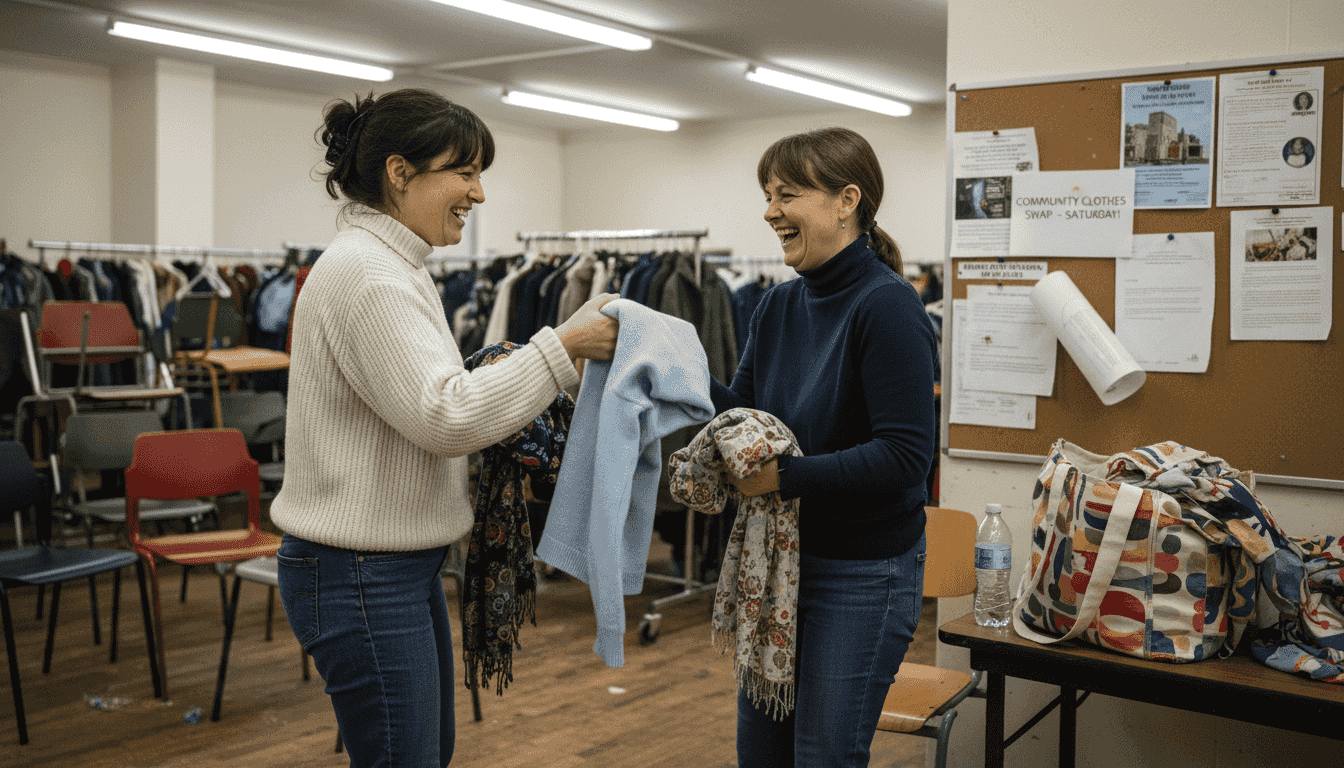
Community-based clothing redistribution demonstrates how apparel can address social needs while reinforcing community cohesion. By creating platforms where clothing circulates within local networks, these models transform garments from individual possessions into community resources that connect people through shared experiences and mutual care.
Ultimately, community-driven clothing represents more than fashion - it’s a revolutionary approach to social connection, where every thread tells a story of collaboration, empathy, and collective creativity. It challenges us to reimagine clothing as a dynamic, interactive medium for building stronger, more connected communities.
Pro tip: Participate in local clothing swaps or collaborative design workshops to experience the transformative power of community-driven fashion.
Ethical Sourcing and Sustainability Benefits
Ethical sourcing represents the heartbeat of community-driven clothing, transforming fashion from an extractive industry into a regenerative ecosystem of social and environmental responsibility. By prioritizing transparent, collaborative production methods, these initiatives challenge the traditional fast-fashion model and create meaningful change.
Sustainability principles in fashion drive community-driven clothing through several critical strategies:
- Reducing global resource extraction
- Minimizing environmental pollution
- Empowering local production networks
- Creating closed-loop manufacturing systems
- Promoting worker dignity and fair compensation
Circular fashion models emerge as a powerful approach to sustainable clothing production. Circular economy practices enable communities to reimagine clothing as a dynamic, renewable resource rather than a disposable commodity. These models emphasize reuse, repair, and upcycling, transforming waste into valuable design opportunities.
Beyond environmental benefits, ethical sourcing creates profound social impact. By centering transparency, fair labor practices, and community collaboration, these initiatives challenge systemic inequalities in global supply chains. They demonstrate that clothing can be a vehicle for economic empowerment, cultural preservation, and collective wellbeing.
Pro tip: Research clothing brands that provide detailed information about their supply chain and production practices to support truly ethical fashion.
Risks, Challenges, and What to Avoid
Community-driven clothing, while transformative, confronts numerous complex challenges that can potentially undermine its core mission. Understanding these risks is crucial for maintaining authentic, impactful initiatives that truly serve community needs and sustainable objectives.
Sustainable behavior challenges in community-driven clothing reveal critical pitfalls to navigate:
- Superficial greenwashing claims
- Consumer skepticism
- Systemic supply chain barriers
- Lack of genuine transparency
- Performative sustainability efforts
The most significant risk involves creating performative initiatives that look good on the surface but lack substantive impact. Circular fashion initiatives caution against treating sustainable clothing as a marketing trend rather than a fundamental reimagining of production and consumption.
Moreover, scaling community-driven clothing requires delicate balance. Rapid expansion can dilute community trust, compromise ethical standards, and transform collaborative models into traditional corporate structures. Successful initiatives must prioritize genuine community engagement, maintain transparent communication, and resist the temptation to prioritize growth over authentic social impact.
Critical warning signs include one-dimensional sustainability claims, lack of comprehensive supply chain documentation, and initiatives that exclude marginalized community voices from decision-making processes. True community-driven clothing demands continuous, critical self-reflection and a commitment to evolving practices.
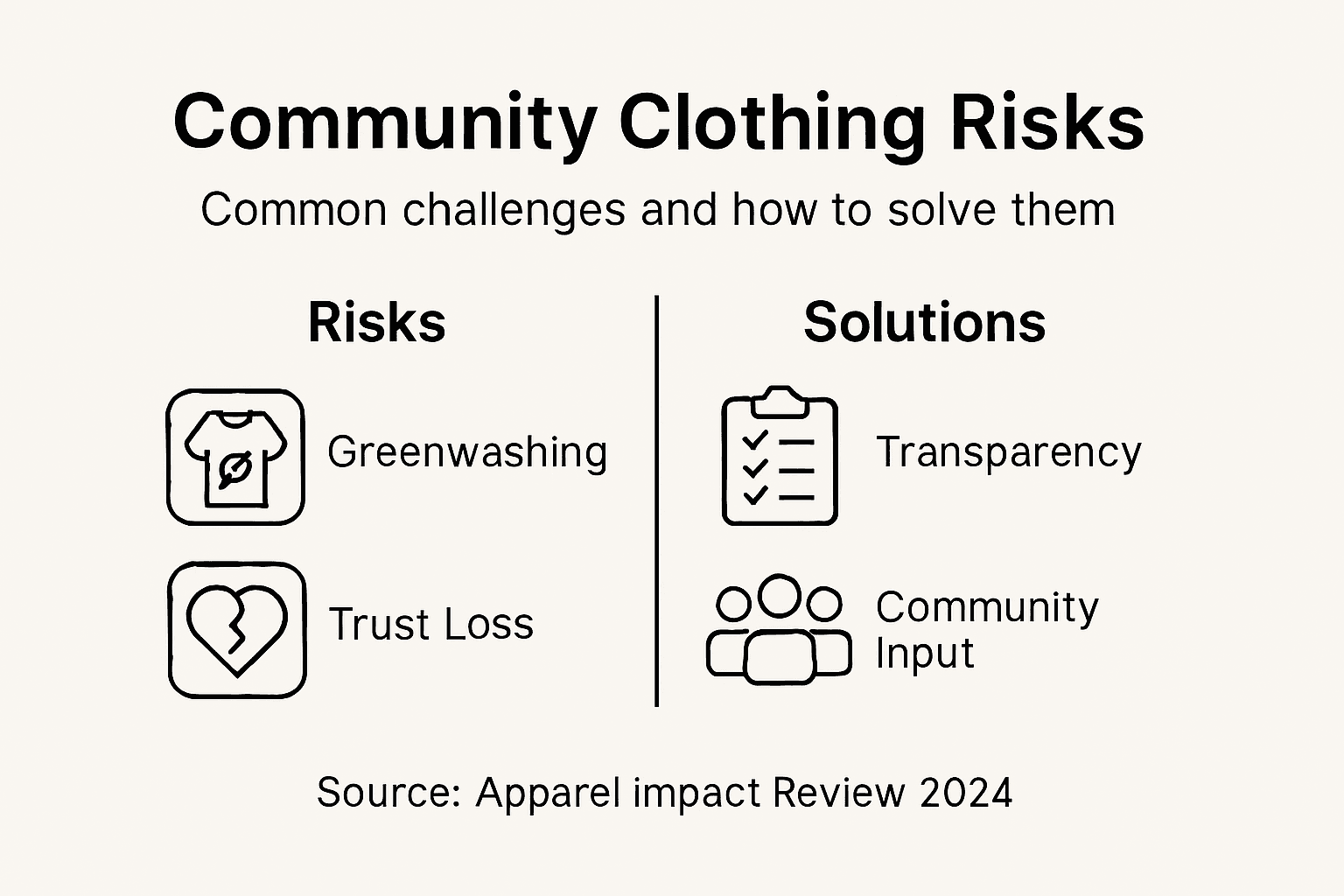
This summary highlights core risks and how to responsibly engage with community-driven clothing:
| Risk Area | Potential Issue | How to Address Effectively |
|---|---|---|
| Greenwashing | Misleading sustainability | Verify transparency documents |
| Rapid Scaling | Loss of community input | Sustain open communication |
| Exclusion | Marginalized voices ignored | Include diverse representatives |
| Performative Claims | Shallow impact initiatives | Assess real long-term outcomes |
Pro tip: Always request detailed documentation about a brand’s community engagement and sustainability practices before supporting their initiatives.
Discover Clothing That Connects and Makes an Impact
Community-driven clothing is all about creating meaningful connections, shared stories, and social impact through fashion. The key challenge lies in finding apparel that not only reflects your unique identity but also supports ethical sourcing and authentic community involvement. At ChillStitch.com, we solve this by blending vintage-inspired humor and pop culture wit with ethically sourced fabrics, giving you clothing that sparks conversations and builds belonging.
Bold designs, thoughtful production, and message-driven apparel are our way of turning every tee and hoodie into a statement of shared values and personal expression. Whether you’re looking to make your voice heard or simply want clothes that feel like part of your story, ChillStitch offers styles that embody the spirit of community-driven fashion.
Explore our selection at ChillStitch to find your perfect fit that honors connection and creativity.
Join a movement where clothes say more than fashion. Find your statement piece now and experience the power of apparel that truly talks back at ChillStitch. Wear it proud and wear it with purpose.
Frequently Asked Questions
What is community-driven clothing?
Community-driven clothing is a fashion movement that emphasizes collaborative design, ethical production methods, and social impact, focusing on collective participation from various stakeholders in the creation process.
How does community-driven clothing promote sustainability?
It promotes sustainability by prioritizing ethical sourcing, minimizing environmental pollution through circular economy practices, and empowering local production networks, thereby transforming clothing from a disposable commodity into a renewable resource.
What are some models of community-driven apparel?
Popular models include localized supply chain networks, second-hand clothing ecosystems, and participatory design, each emphasizing unique approaches to collaboration, social impact, and sustainability within the community.
What are the risks associated with community-driven clothing?
Risks include superficial greenwashing claims, rapid scaling that may compromise community engagement, and exclusion of marginalized voices from decision-making processes, which can undermine the initiative’s impact and authenticity.
Recommended
- What Is Community-Driven Apparel and Why It Matters – ChillStitchApparel
- Fandom Apparel: How Clothing Builds Community – ChillStitchApparel
- Role of Story in Apparel – How It Shapes Identity – ChillStitchApparel
- Why Words Matter on Clothes – Identity, Humor, Connection – ChillStitchApparel
- Role of Streetwear in Fandom: Self-Expression and Community – IGZ Clothing