

You spot a faded band tee at a thrift store and wonder: is this genuinely vintage or just a clever reproduction? The difference between vintage and retro graphic fashion confuses many young adults seeking authentic nostalgic style. Vintage means authentic apparel at least 20 years old, carrying unique construction markers and genuine wear patterns that reproductions can’t replicate. This guide clarifies what makes graphic fashion truly vintage, teaches you authentication techniques, explores decades of cultural evolution, and shows how to style these pieces with modern flair in 2026.
Table of Contents
- Understanding Vintage Graphic Fashion: Definition And Origins
- How To Identify Authentic Vintage Graphic Tees
- The Cultural And Style Evolution Of Vintage Graphic Tees
- How Young Adults And Retro Enthusiasts Style Vintage Graphic Fashion Today
- Explore Vintage-Inspired Apparel At ChillStitch
- Frequently Asked Questions About Vintage Graphic Fashion
Key takeaways
| Point | Details |
|---|---|
| Vintage means authentic 20+ years old | Genuine vintage graphic apparel dates from the 1970s through early 2000s with period-specific construction and natural aging. |
| Authentication requires multiple checks | Single-stitch seams, period tags, natural ink fading, heavy cotton fabric, and textured prints confirm authenticity. |
| Cultural evolution shaped designs | Graphic tees evolved from 1940s military prints through psychedelic 70s, bold 80s geometrics, to oversized 90s pop culture statements. |
| Modern styling blends eras | Pair vintage graphic tees with high-waisted jeans, layered flannels, and contemporary accessories for unique fusion looks. |
| Retro enthusiasts drive 2026 demand | Young adults seek nostalgic humor-infused pieces via thrifting and online platforms like Depop and Etsy. |
Understanding vintage graphic fashion: definition and origins
Vintage graphic fashion refers to authentic graphic tees and apparel at least 20 years old with genuine wear and period-specific construction. In 2026, this includes pieces from the 1970s through the early 2000s. These garments feature printed images, logos, slogans, band names, or pop culture references that defined their era.
The history of graphic tees traces back to the 1940s when military personnel wore printed undershirts. Commercial graphic tees emerged in the 1950s with promotional designs, then exploded in the 1960s as tie-dye and protest slogans became wearable statements. Each subsequent decade added layers of cultural meaning, from 1970s rock concert tees to 1980s neon geometric prints and 1990s oversized grunge band shirts.
Understanding this historical context helps you appreciate why certain design elements matter. A 1987 concert tee carries different construction details than a 1996 movie promo shirt. Period-specific printing techniques, fabric weights, and cut styles all evolved through these decades.
Why does vintage matter to retro enthusiasts today? Authenticity creates connection to cultural moments you admire. Each genuine vintage piece tells a story through its wear patterns, faded colors, and survived decades. You’re not just wearing a shirt, you’re carrying a tangible piece of pop culture history that mass-produced reproductions can’t replicate.
Vintage graphic fashion offers uniqueness in an era of fast fashion sameness. No two authentically aged tees look identical. The natural fading, subtle cracking in screen prints, and softened fabric create character that new garments lack, making vintage pieces conversation starters and style statements rolled into one.
Key characteristics of authentic vintage graphic apparel include:
- Genuine age markers like yellowed fabric and period-appropriate tags
- Construction techniques specific to pre-2000s manufacturing
- Cultural references authentic to the garment’s era
- Natural wear patterns from decades of use
- Heavier cotton weights than modern fast fashion
How to identify authentic vintage graphic tees
Authentication involves checking single-stitch seams, period-specific tags, natural ink fading, heavy cotton, and textured prints. Approximately 40% of tees marketed as vintage are actually reproductions, so knowing authentication methods protects your investment and ensures you’re getting genuine pieces.
Check the hem and sleeve seams first. Single-stitch construction, where one line of stitching secures the hem, indicates pre-mid-1990s manufacturing. Most modern tees use double-stitch (two parallel lines) for durability. While some legitimate vintage pieces have double-stitch, single-stitch strongly suggests authenticity when combined with other markers.
Inspect the tag carefully for period-specific details. Authentic vintage tags show manufacturer names like Hanes, Fruit of the Loom, or Screen Stars with “Made in USA” labels common before offshore manufacturing dominated. Spot fake vintage labels by checking font consistency, tag placement, and wear patterns. Reproduction sellers sometimes swap modern tags for vintage-looking replacements.
Examine the print quality and fabric texture closely. Authentic vintage screen prints feel slightly raised and textured, not smooth like modern digital prints. Natural aging creates ink cracking in specific patterns, particularly in areas of stress or frequent washing. The fabric itself should feel substantial, typically 100% cotton weighing more than contemporary tees.
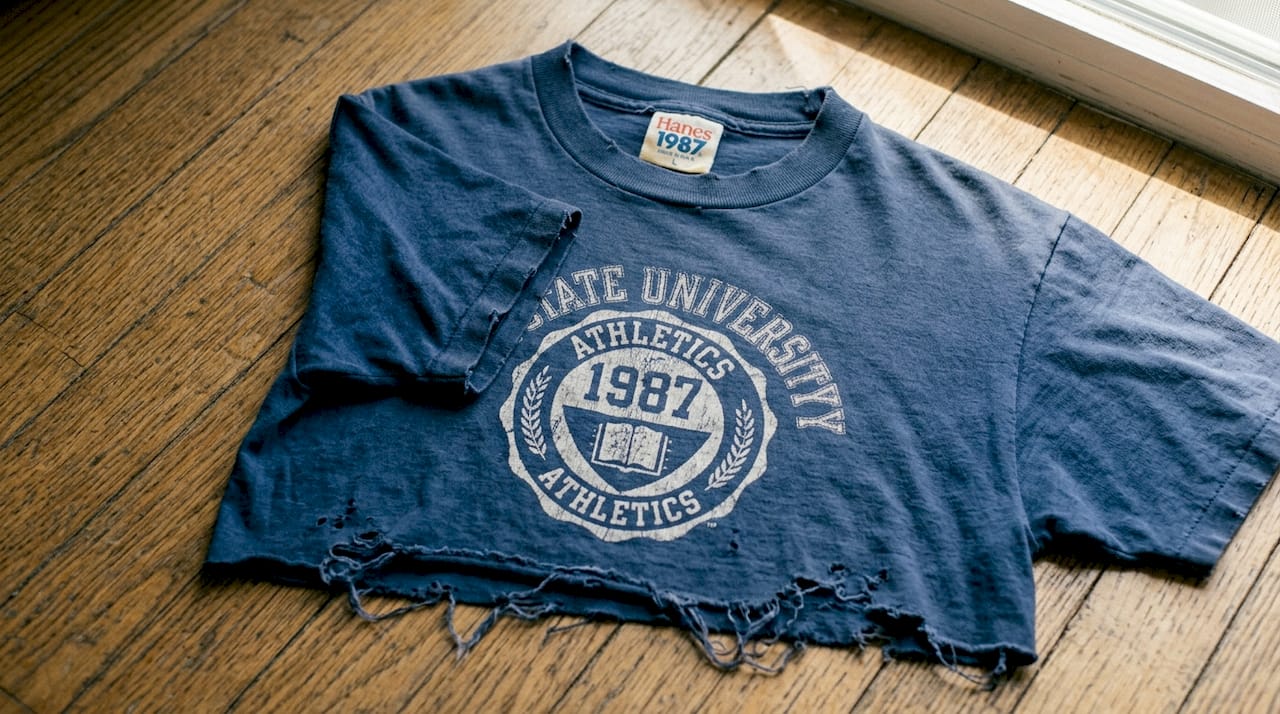
Look at the overall cut and fit. Vintage tees tend toward boxier, less fitted silhouettes compared to modern slim cuts. Sleeves sit differently, and the torso length reflects era-specific style preferences. A 1990s oversized band tee has distinctly different proportions than a reproduction designed for 2026 body trends.
Pro Tip: Never rely on a single authentication marker. Cross-check at least three or four signs including stitching, tags, print texture, fabric weight, and cut style to confidently verify authenticity before purchasing.
| Feature | Authentic Vintage | Retro Reproduction | Modern Graphic Tee | | — | — | — | | Age | 20+ years old | Recently manufactured | Current production | | Seam stitching | Often single-stitch | Usually double-stitch | Double-stitch | | Fabric weight | Heavy 100% cotton | Variable, often lighter | Lightweight blends | | Print texture | Raised, cracked naturally | Smooth or artificially distressed | Smooth digital print | | Tags | Period-specific, worn | Reproduction vintage-style | Modern brand tags | | Cut | Boxier, era-specific | Modern fit with vintage aesthetic | Contemporary slim fit |
Beware of artificially distressed reproductions designed to mimic vintage wear. Manufacturers create fake fading through chemical treatments and mechanical abrasion. These lack the random, organic patterns genuine decades of wear create. Check multiple areas: authentic aging shows inconsistent fading based on how the garment was actually worn and washed.
For more guidance on authenticating and styling vintage finds, explore our vintage tee styling guide and discover ways to rock retro tshirt designs that blend authentic pieces with contemporary fashion sensibilities.
The cultural and style evolution of vintage graphic tees
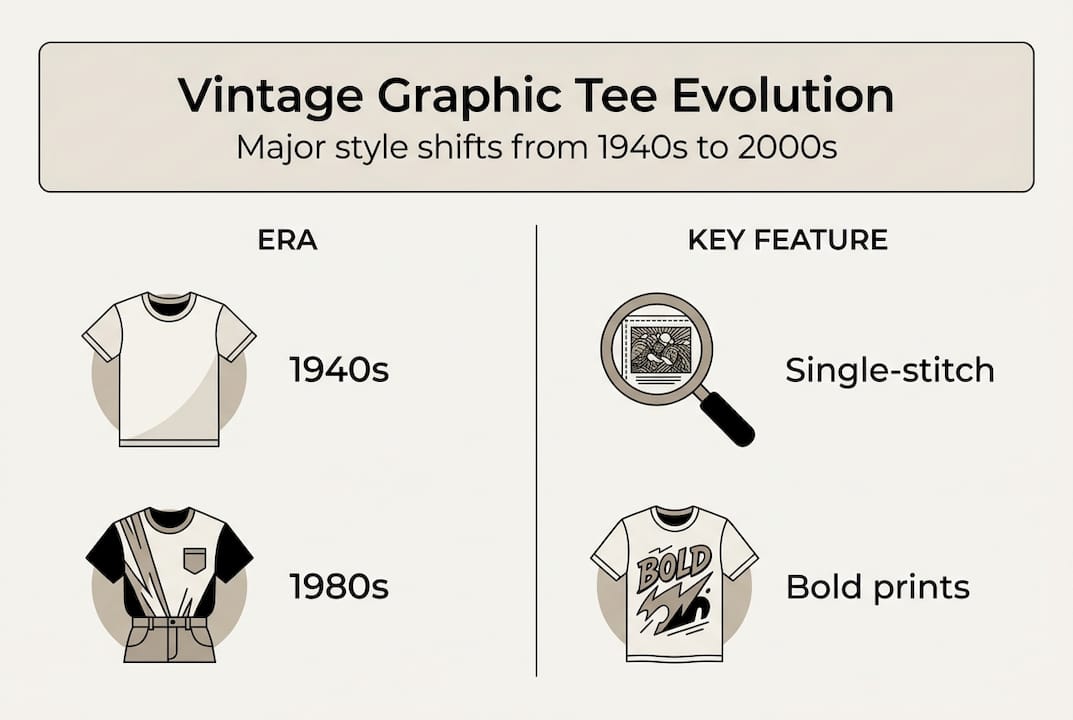
Graphic tees evolved from 1940s military prints to 70s bohemian, 80s bold geometrics, and 90s oversized pop culture designs. Each decade’s social movements, artistic trends, and technological advances shaped what people wore and how graphics communicated identity. Understanding this evolution deepens your appreciation for the vintage pieces you collect and style.
-
1940s military foundations: Printed undershirts for military personnel introduced the concept of graphic apparel, though civilian adoption remained limited until the 1950s when promotional tees emerged.
-
1970s psychedelic and bohemian era: Tie-dye exploded alongside rock concert merchandise and protest slogans. Graphics became bolder, more colorful, and deeply tied to counterculture movements. Screen printing technology advanced, enabling more complex multi-color designs.
-
1980s bold geometric and pop art styles: Neon colors, geometric patterns, and abstract designs dominated. MTV culture influenced graphic choices as music videos became visual references. Sports brands and corporate logos gained prominence as branded apparel became fashion statements.
-
1990s oversized band and pop culture references: Grunge and hip-hop cultures popularized oversized fits with bold band names, movie references, and ironic slogans. This era produced many of the most sought-after vintage pieces in 2026 due to nostalgic millennials and Gen Z discovering 90s aesthetics.
Cultural significance extends beyond mere clothing. Graphic tees became wearable statements of allegiance, humor, rebellion, or identity. A 1977 Ramones concert tee signaled punk affiliation. A 1985 Coca-Cola graphic represented pop art consumerism. A 1994 Nirvana shirt communicated grunge authenticity. These weren’t just fashion choices but cultural markers.
“Each era’s graphic tees captured the visual language and social pulse of their time, making vintage pieces both fashion items and historical artifacts that connect wearers to specific cultural moments they admire or wish they’d experienced.”
Collectors and stylists appreciate these evolutionary phases because they offer diverse aesthetic options. You might style a 1970s psychedelic tee differently than a 1990s minimalist band shirt, each bringing distinct energy to your outfit. The variety across decades means vintage graphic fashion suits multiple personal styles and occasions.
Social and artistic trends directly influenced design choices in each period. The 1960s civil rights movement appeared in protest graphics. 1980s consumerism manifested in brand-heavy designs. 1990s internet culture began appearing on tees as technology entered mainstream consciousness. These connections make vintage pieces conversation starters that spark discussions about history, culture, and shared nostalgia.
For inspiration on incorporating these diverse vintage styles into your wardrobe, check out vintage graphic tees examples showcasing how different eras create unique looks when styled thoughtfully with modern pieces.
How young adults and retro enthusiasts style vintage graphic fashion today
Young adults seek nostalgic humor-infused graphic tees via thrifting, Depop, Etsy and style them with modern pieces like high-waisted jeans and flannels for unique looks. The 2026 vintage fashion landscape blends accessibility through digital platforms with the treasure hunt excitement of physical thrift stores.
Popular vintage graphic themes resonate with retro enthusiasts seeking authentic self-expression:
- Band tees from 70s through 90s rock, punk, and grunge acts
- Nostalgic cartoon and TV show references from childhood favorites
- Quirky pop culture moments and meme-worthy vintage graphics
- Sports team logos and college apparel with authentic aging
- Abstract geometric and psychedelic designs from various decades
Best sourcing methods combine online convenience with in-person discovery. Thrift stores like Goodwill and local vintage shops offer hands-on inspection where you can check authentication markers before buying. Online platforms including Depop, Etsy, Poshmark, and eBay provide wider selection but require careful photo examination and seller communication about condition and measurements.
Styling vintage graphic tees with modern elements creates the trendy vintage-pop fusion aesthetic dominating 2026 fashion. Pair a faded 1990s band tee with high-waisted mom jeans and chunky sneakers for casual cool. Layer a 1980s geometric print tee under an oversized flannel shirt with distressed denim for grunge-inspired looks. Tuck a 1970s psychedelic tee into a midi skirt with ankle boots for unexpected feminine-meets-retro contrast.
Mixing eras intentionally produces distinctive personal style. Combine a vintage graphic tee with contemporary accessories like minimalist jewelry, modern sunglasses, or current-season outerwear. The contrast between authentic vintage and fresh modern pieces creates visual interest that pure vintage or all-new outfits lack. You’re curating rather than costuming.
Pro Tip: When buying vintage pieces secondhand online, request detailed photos of tags, seams, and any wear or damage. Ask sellers about measurements rather than relying on listed sizes, since vintage sizing differs significantly from modern standards.
Authentic vintage pieces appeal to Gen Z and retro communities for several compelling reasons. Sustainability matters as reusing existing garments reduces fashion waste. Uniqueness guarantees you won’t see someone else wearing your exact piece. Affordability makes vintage accessible, with many authentic tees costing less than new designer graphics. Most importantly, vintage connects you to cultural moments and aesthetics you admire, whether you lived through them or discovered them later.
For additional styling inspiration and techniques, explore our tips for styling graphic tees and learn how to create a retro graphic tee guide that reflects your personal aesthetic while honoring vintage fashion traditions.
Explore vintage-inspired apparel at ChillStitch
Now that you understand authentic vintage graphic fashion, consider how vintage-inspired pieces offer similar nostalgic appeal with modern comfort and quality. ChillStitch creates hoodies and sweatshirts that capture retro vibes while delivering contemporary fit and durability. Our designs blend throwback imagery with playful graphics that spark conversations and reflect your quirky interests.
Explore unique pieces like the Tree of Life Blues hoodie featuring psychedelic-inspired graphics, the Trippy Hippie Sunglasses sweatshirt channeling 70s bohemian energy, or the Explore Dream Discover sweatshirt combining vintage typography with adventure spirit. Each piece uses ethically sourced fabrics and quality printing that honors vintage aesthetics while meeting modern standards. Whether you’re building a collection of authentic vintage finds or seeking vintage-inspired designs with guaranteed sizing and condition, ChillStitch offers apparel that lets your personality shine through nostalgic, humor-infused style.
Frequently asked questions about vintage graphic fashion
What makes a graphic tee truly vintage?
A graphic tee qualifies as truly vintage when it’s at least 20 years old, meaning pieces from 2006 or earlier in 2026. Authentic vintage tees display period-specific construction like single-stitch seams, era-appropriate tags such as Made in USA labels, and natural aging including faded colors and cracked screen prints. The combination of genuine age, authentic manufacturing details, and organic wear patterns distinguishes real vintage from reproductions.
How can I tell if a vintage graphic tee is authentic?
Authentication requires checking multiple markers together rather than relying on one sign. Examine seam stitching for single-stitch construction common before the mid-1990s. Inspect tags for period-specific manufacturers and worn label conditions. Feel the print texture, which should be raised and naturally cracked, not smooth. Check fabric weight, as vintage tees use heavier 100% cotton than modern fast fashion. Cross-referencing these elements helps you confidently verify authenticity.
Where can young adults find vintage graphic fashion?
Thrift stores like Goodwill and local vintage shops offer hands-on browsing where you can inspect pieces directly. Online platforms including Depop, Etsy, Poshmark, and eBay provide wider selection with detailed photos and seller ratings. Vintage markets, estate sales, and specialty consignment stores yield unique finds. Each source has advantages: physical stores allow immediate authentication checks, while online shopping offers convenience and broader inventory from sellers nationwide.
What’s the difference between vintage and retro graphic tees?
Vintage refers to original garments at least 20 years old with authentic period construction and genuine aging. Retro describes newly manufactured reproductions designed to mimic vintage aesthetics through distressing techniques and throwback graphics. Vintage pieces carry historical authenticity and unique wear patterns from decades of use. Retro tees offer vintage-inspired style with modern sizing, consistent quality, and availability but lack the genuine cultural connection and one-of-a-kind character of authentic vintage apparel.
How do I style vintage graphic tees for a modern look?
Create contemporary outfits by pairing vintage tees with current pieces like high-waisted jeans, which balance the boxier vintage cut. Layer under oversized flannels or denim jackets for dimension. Add modern accessories including minimalist jewelry, contemporary sneakers, or current-season bags. Tuck vintage tees into midi skirts or tailored trousers for unexpected contrast. Mixing authentic vintage graphics with fresh modern elements produces the trendy fusion aesthetic that defines 2026 retro fashion while keeping your look current rather than costume-like.
Recommended
- Vintage Graphics Explained: Style, Trends, and Uses – ChillStitchApparel
- Vintage-inspired apparel: style, story, trends 2026 – ChillStitchApparel
- Why retro designs are trending in 2026: culture & sustainability – ChillStitchApparel
- What Is Vintage Fashion? Complete Style Breakdown – ChillStitchApparel